





Point the engine at a source and get completeness, uniqueness, pattern, and frequency analysis on every field, plus a duplicate risk score. The local AI reads that profile and tells you which fields are worth matching on.
Learn moreThe AI reads your actual values and drafts a cleansing recipe: which abbreviations to expand, which patterns to normalize, which noise words to strip. You edit the recipe before it runs, and every transformation is logged and reversible.
Learn moreMatchCore runs fuzzy, phonetic, numeric, and deterministic logic on rules you can read line by line. The AI proposes the rules, thresholds, and weights based on what it found in your profile. You change any of them, and the engine explains every score it assigns.
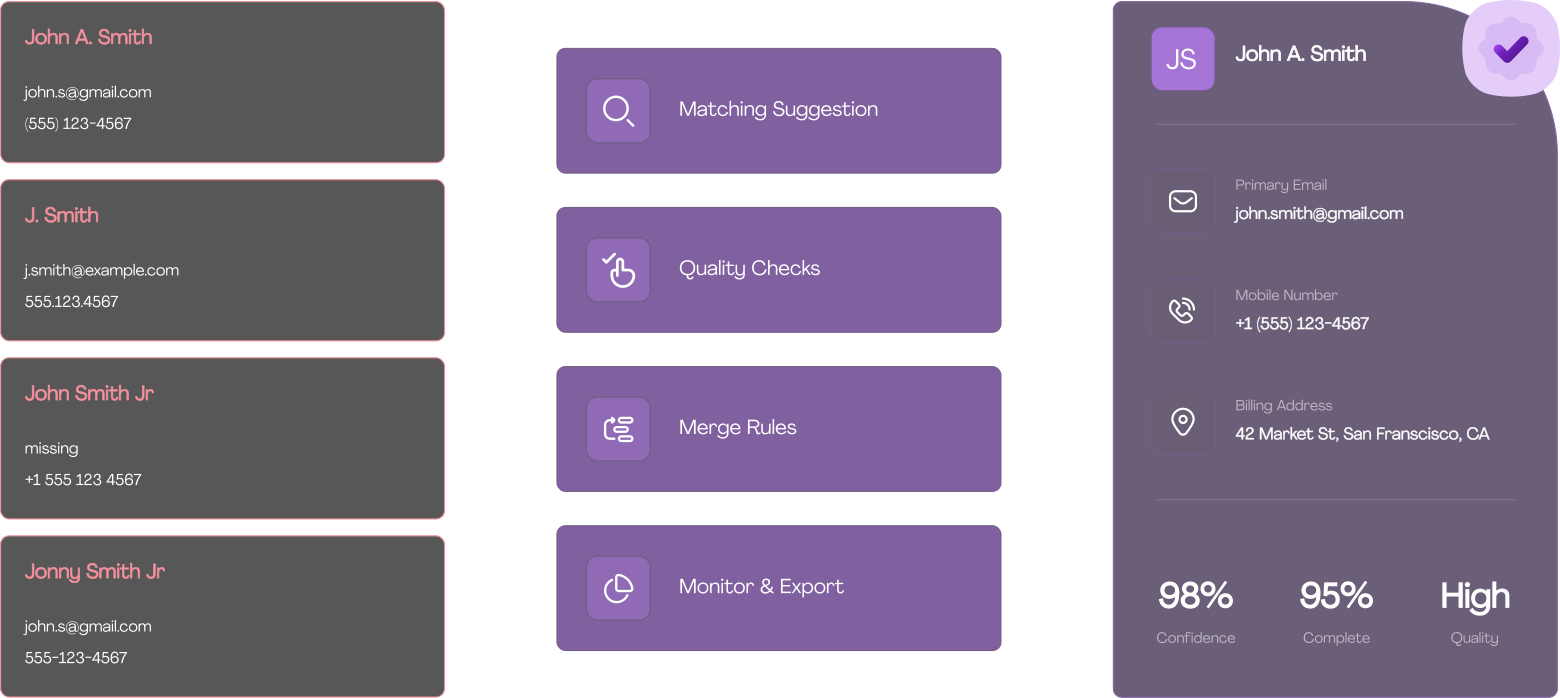
Learn moreDecide which source wins on each field, which values survive, and which conflicts go to a human. Nothing is discarded silently. Every merged record keeps a lineage trail back to the source rows that built it.
Learn moreRun it on a desktop, on a server, through the API inside your pipelines, or through the MCP server from an agent. Set alerts for when match confidence drifts, so cleanup stops being a quarterly ritual.
Learn moreMost agentic data quality platforms send your data, your metadata, or your prompts to a model somebody else operates. MatchLogic ships a model that runs inside your perimeter with no outbound connection. It reads your data, drafts your rules, and explains its reasoning without a packet leaving the building.
 Talk to a Human
Runs on-premises, in your private cloud, or fully air-gapped. No outbound calls from the model. No exceptions.
The local model reads your profile and drafts cleansing recipes and match rules: which fields to compare, which algorithms to use, what threshold to set, what should never count as a match. It proposes. You decide.
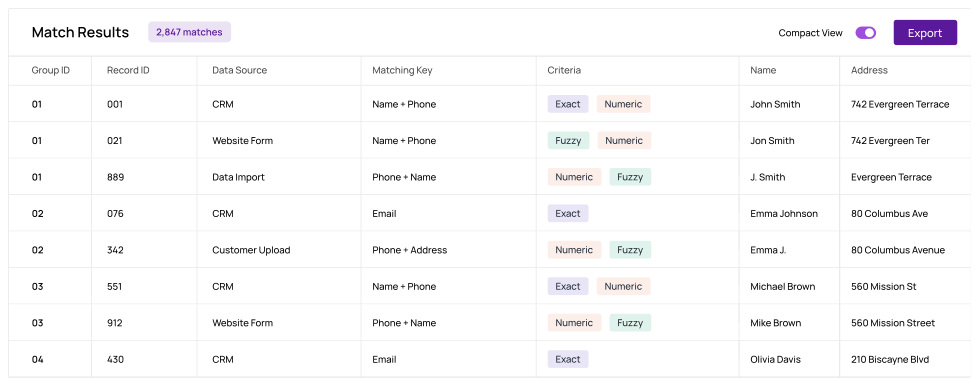
MatchCore gives you rules you write and read. MatchSense resolves people and organizations with no rules at all, preconfigured out of the box, and explains every decision it makes.
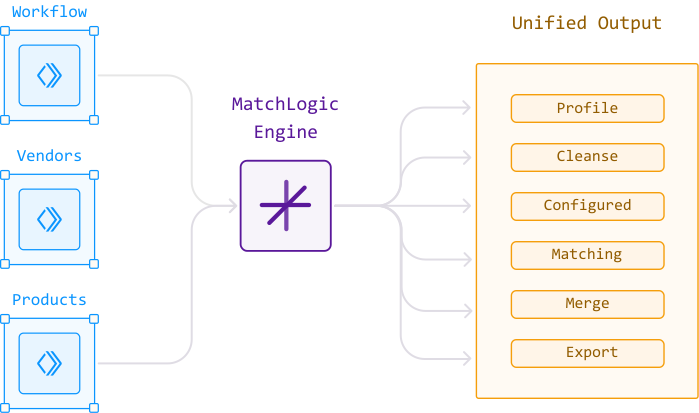
Our MCP server turns profiling, cleansing, matching, golden record creation, and export into tools your agent can call. Use the model your security team already approved. You are not locked into our assistant, our cloud, or our roadmap.

Matched 1.8 million records across three systems with under 2% false positives. Finally have a single source of truth we actually trust.
First profile revealed 40% missing data and format chaos we never suspected. Helped us fix issues before migration.
Merge purge eliminated 60,000 duplicate records from our mailing list. Cut direct mail costs by 34% in the first quarter.

A named specialist who knows your schema, your rules, and your duplicate patterns. They sit with you on the first configuration, walk through what the AI proposed, and tell you where it read your data wrong.

The AI drafts your first rule set during onboarding. You adjust it in the same session and run it against real data before the call ends. No statement of work. No implementation partner.

Your team learns to read confidence scores, tune thresholds, and override the model. No dependency on us to change a rule. No consultant needed to add a data source.
See exactly how MatchLogic’s AI resolves, matches, and merges your actual data. A live demo on real duplicates, with full transparency.
Talk to a Human
MatchLogic gives you both. MatchCore matches records with fuzzy algorithms and deterministic logic you can read and tune, while MatchSense applies pre-trained AI entity resolution that groups records on its own. Both run on your own infrastructure, and both keep every decision explainable.
Profiling instantly shows exact duplicate counts, missing data percentages, format variations, and quality scores for every field. You'll see where "McDonald's" has 20 different spellings, which systems create the most duplicates, and which fields are 40% empty. Visual heat maps highlight problem zones across all your systems simultaneously.
MatchLogic profiles 10 million records in under 8 minutes, maintaining the same speed whether scanning thousands or billions of records. The engine analyzes every field, identifies patterns, calculates quality scores, and generates visual reports without performance degradation.
Most companies discover 25-35% duplicate records they never knew existed. The average first-time profile uncovers thousands of hidden duplicates costing real money. Profiling reveals duplicates hiding behind misspellings, abbreviations, and format differences your team would never catch manually.
Yes. Profiling gives you potential duplicate percentages and risk scores before you write any matching rules. You'll know exactly how many likely duplicates exist, where they cluster, and which fields have the variations causing problems. This helps you configure match rules based on your actual data patterns, not guesswork.
Yes. You can schedule profiling hourly, daily, weekly, or triggered by data loads via API. Embed profiling directly in your data pipelines to catch quality issues before they hit production. Set threshold alerts for when duplicate rates exceed limits or quality scores drop. Automated profiling keeps constant watch without manual intervention.
No. The AI entity resolution engine ships pre-trained on global name, nickname, and address libraries, so it is accurate from the first run. There is no labeled dataset to assemble and no model for your team to train.

.svg)

.png)