
John Smith in your EMR. Jon Smth in your billing system. J. Smith in your insurance database. Jonathan Smith in your lab platform. They are the same patient, but your systems treat them as four different people. MatchLogic finds every variant, links them by confidence score, and gives your team a single, verified identity.

.avif)
.avif)
.avif)
.avif)
.avif)
We were running into patient identity issues every time we onboarded data from a new clinic or acquisition. MatchLogic resolved thousands of duplicate patient records that our existing MPI tools had missed.

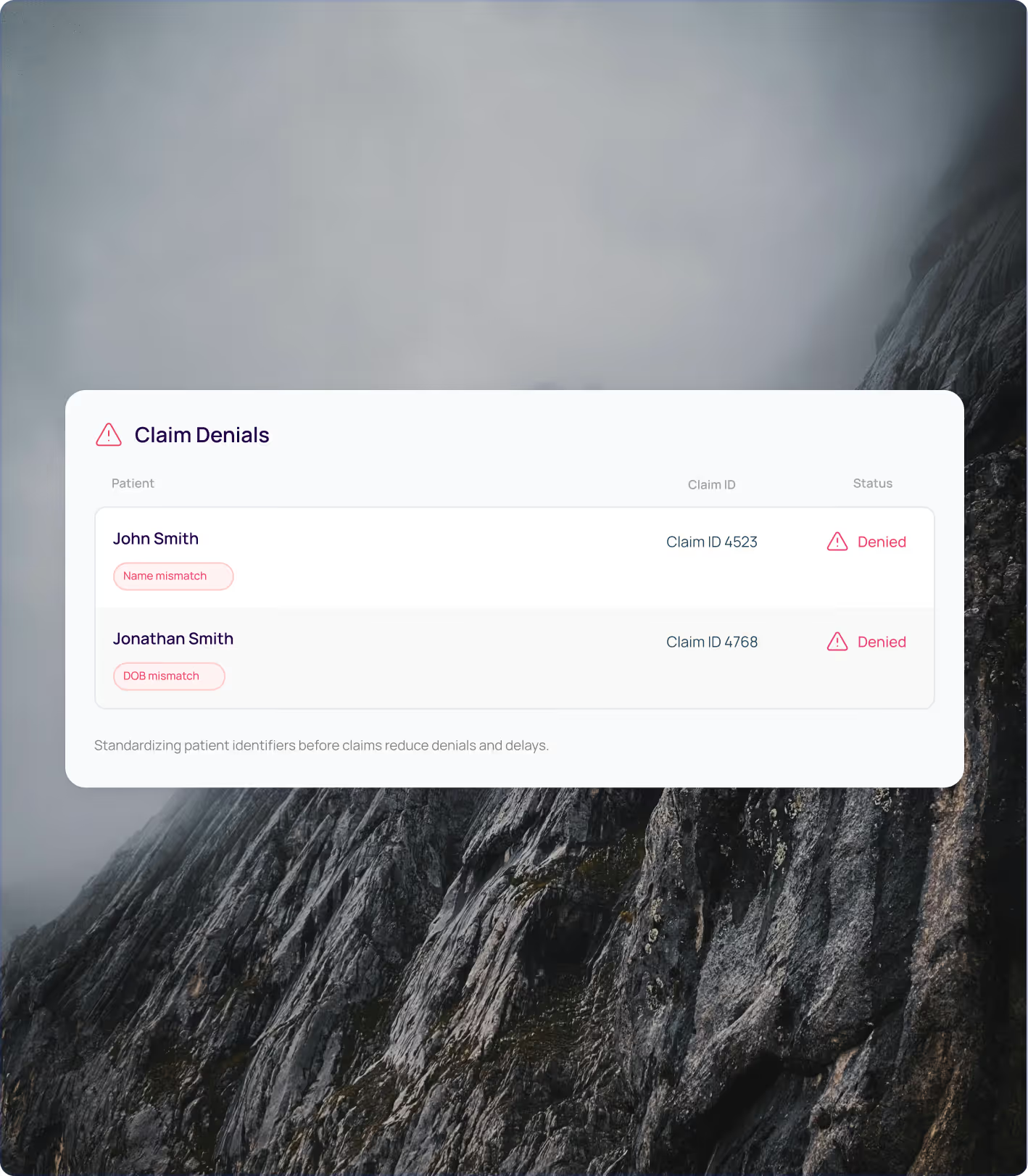
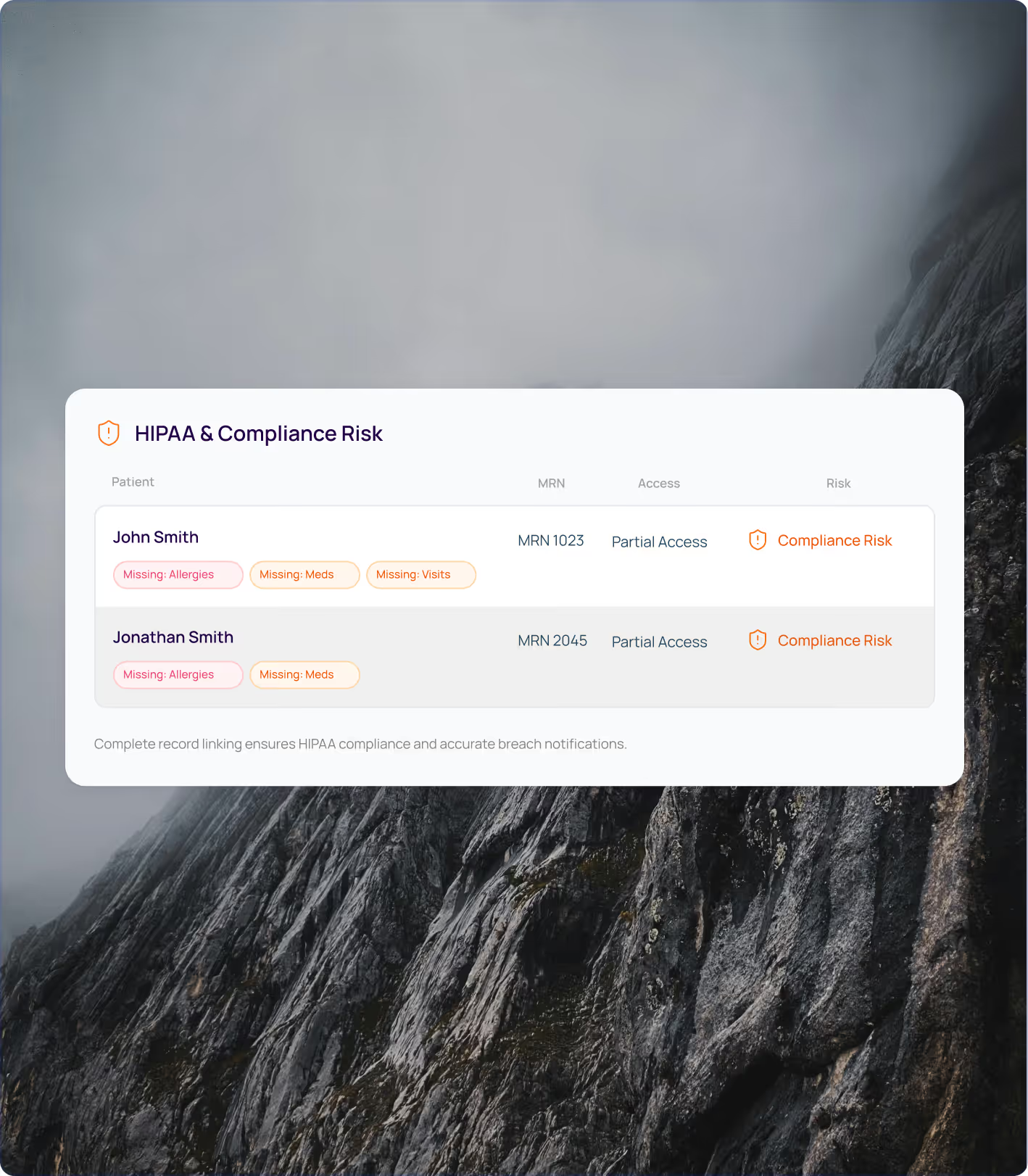
When the same patient exists as multiple records, clinicians see incomplete histories. Lab results get filed under the wrong chart. Insurance claims get denied for mismatched identifiers. Compliance teams cannot produce accurate patient counts for regulatory filings. MatchLogic resolves patient identities across EMRs, billing platforms, lab systems, and insurance databases so every record points to one verified person.
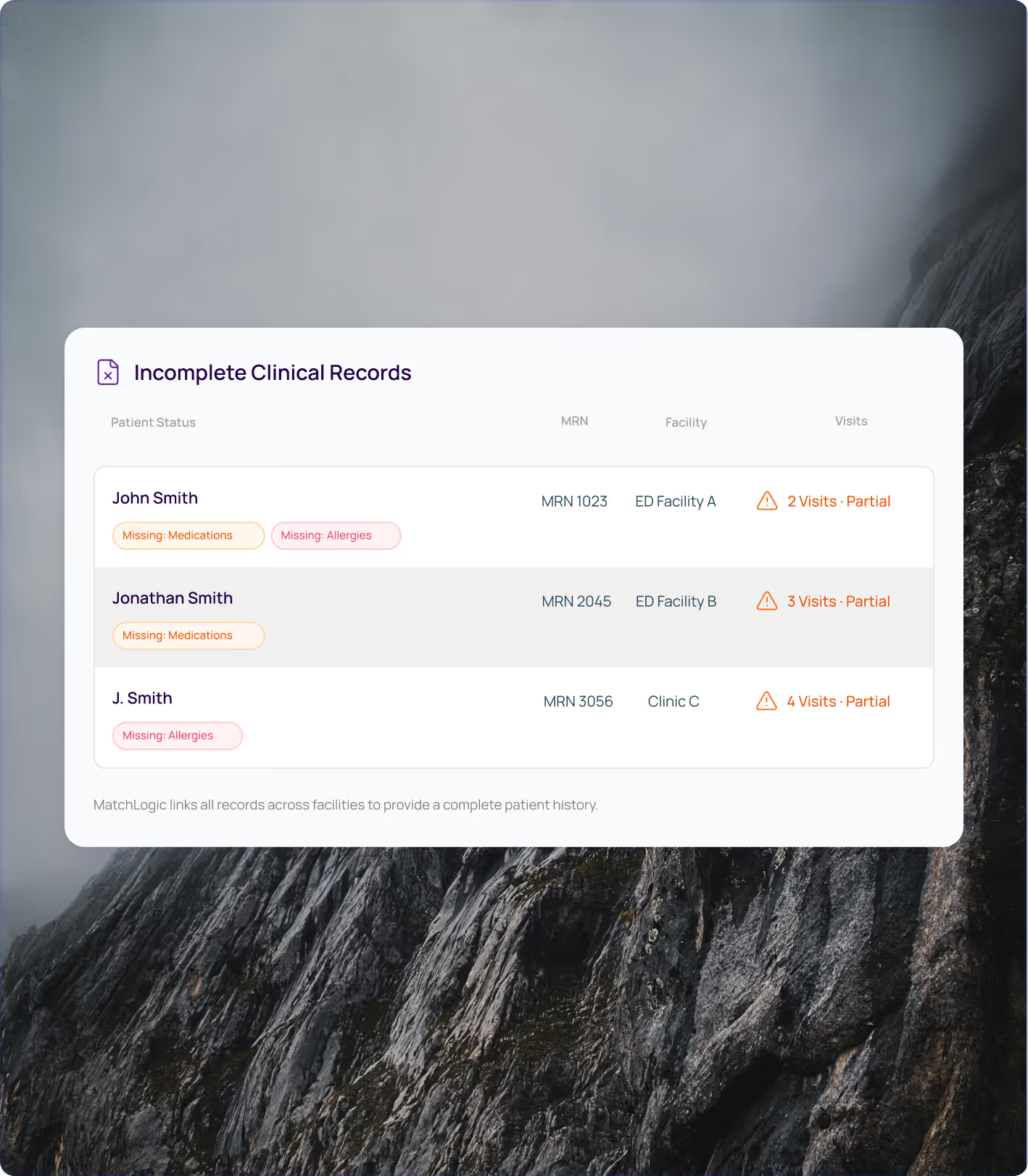
A patient arrives at the emergency department. The clinician pulls up their chart and sees a partial history: two past visits, no medication list, no allergy records. But the patient has been seen nine times across three facilities in the same health system. The other seven visits are filed under a different MRN because the patient's name was entered differently at each location. The clinician makes treatment decisions based on incomplete information. MatchLogic links every record for that patient across every facility so the full history is available when it matters.
Two reps call the same account because it exists under two different company names. Territory assignments overlap when the CRM can't tell that 'Johnson & Johnson' and 'J&J Inc.' are the same buyer. Pipeline reports show phantom opportunities because a single deal is logged against duplicate contact records. Revenue forecasting suffers when the data underneath it has no integrity.
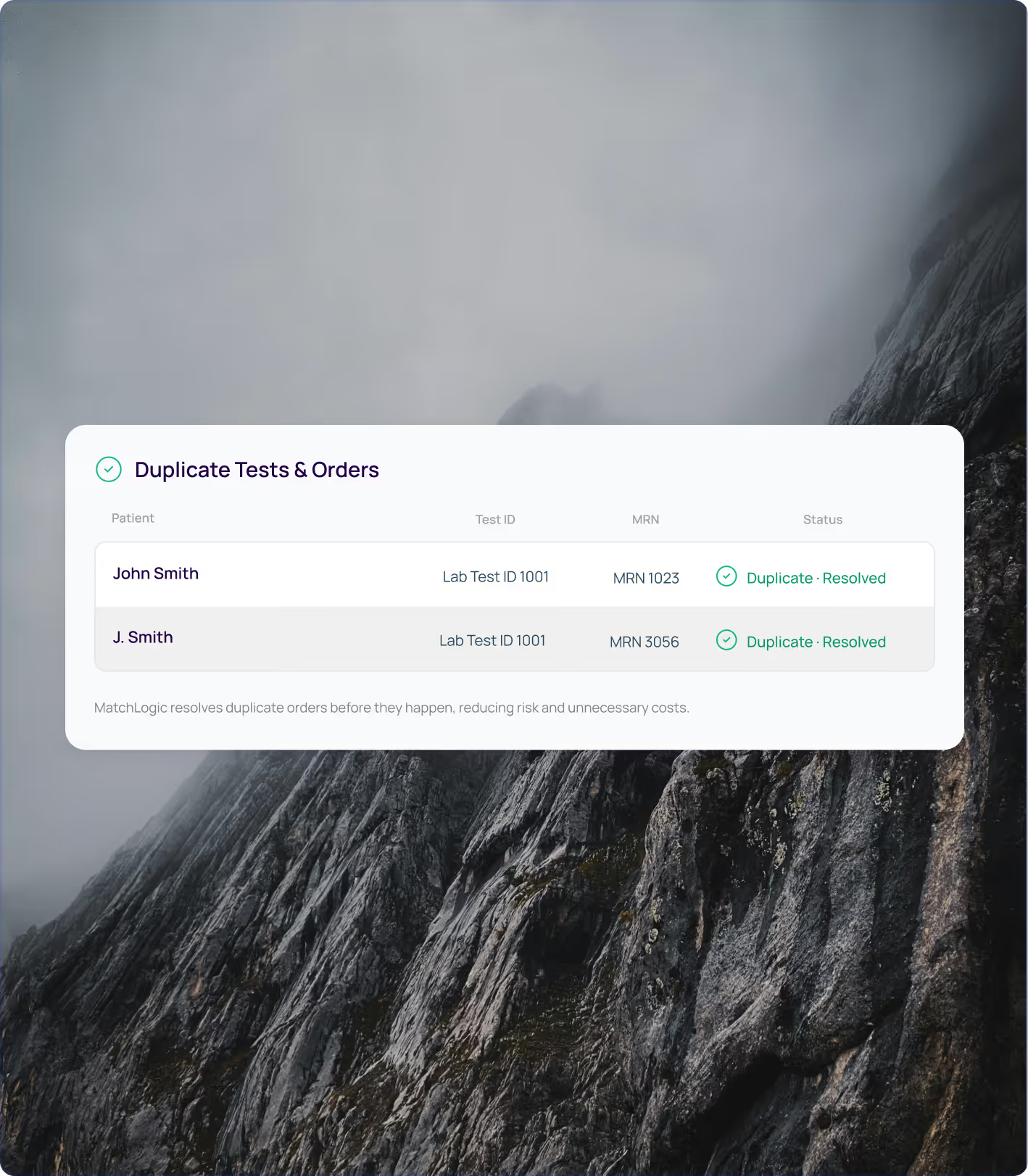
When a patient has two active records, a lab order placed under one MRN does not appear under the other. The ordering physician does not see that the test was already done, so they order it again. The patient gets an unnecessary blood draw, an unnecessary imaging study, or an unnecessary procedure. The organization absorbs the cost. The patient absorbs the inconvenience and the clinical risk of repeated exposure. MatchLogic prevents this by resolving the duplicate records before orders are placed.
Regulations like GDPR and CCPA require organizations to honor data subject requests across every system. If a customer exists as three separate records, a deletion request might only remove one. Incomplete compliance exposes the organization to fines and audit findings. Duplicate records are a direct liability when regulators come looking.
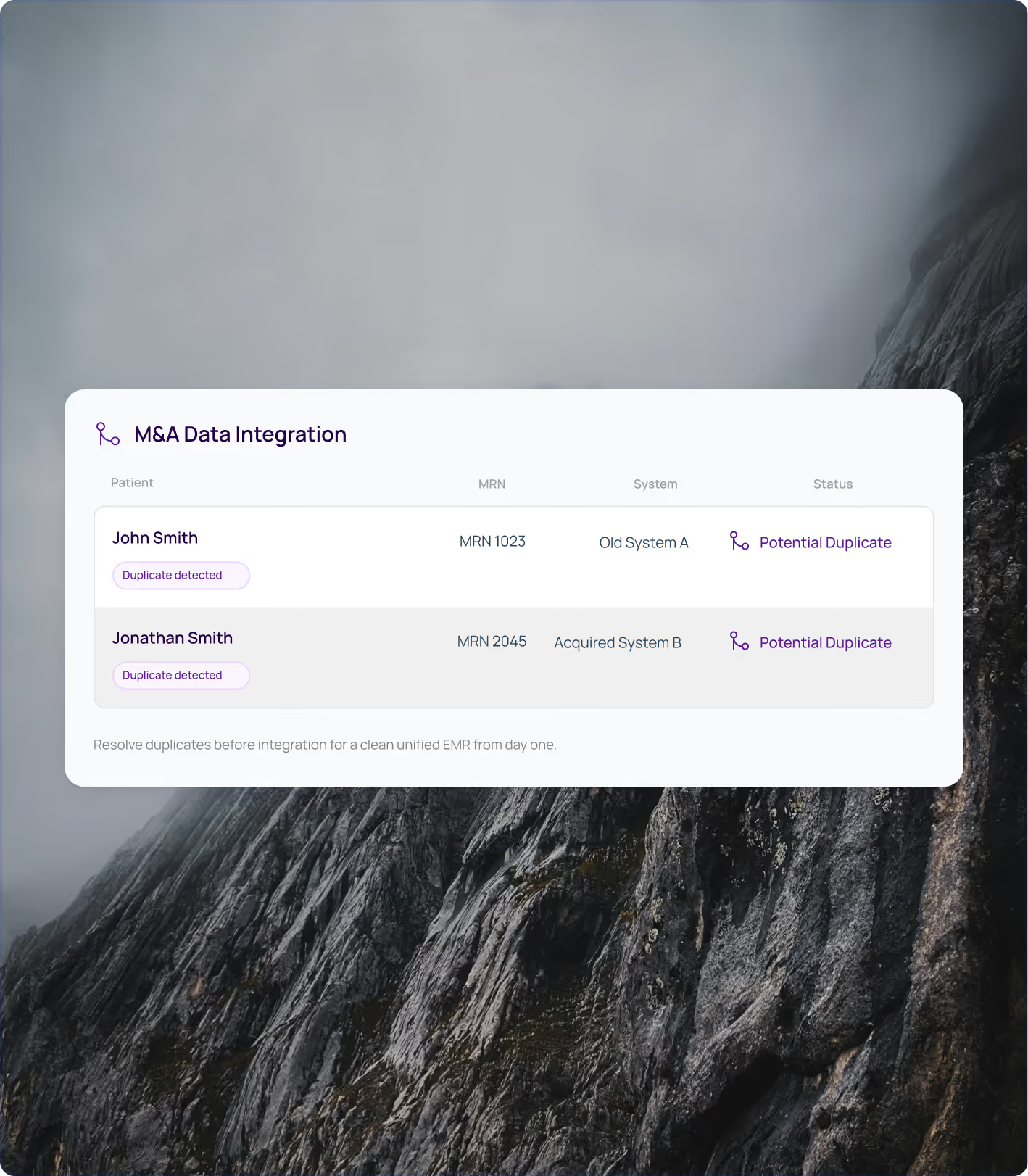
The new ERP connects to downstream systems through APIs and data feeds. Those integrations assume clean, deduplicated master data. When a customer record exists three times in the new system, downstream processes break in unpredictable ways: order management routes to the wrong account, billing sends invoices to outdated addresses, support tickets open against phantom customer profiles. Every integration point becomes a potential failure point when the underlying data has duplicates.
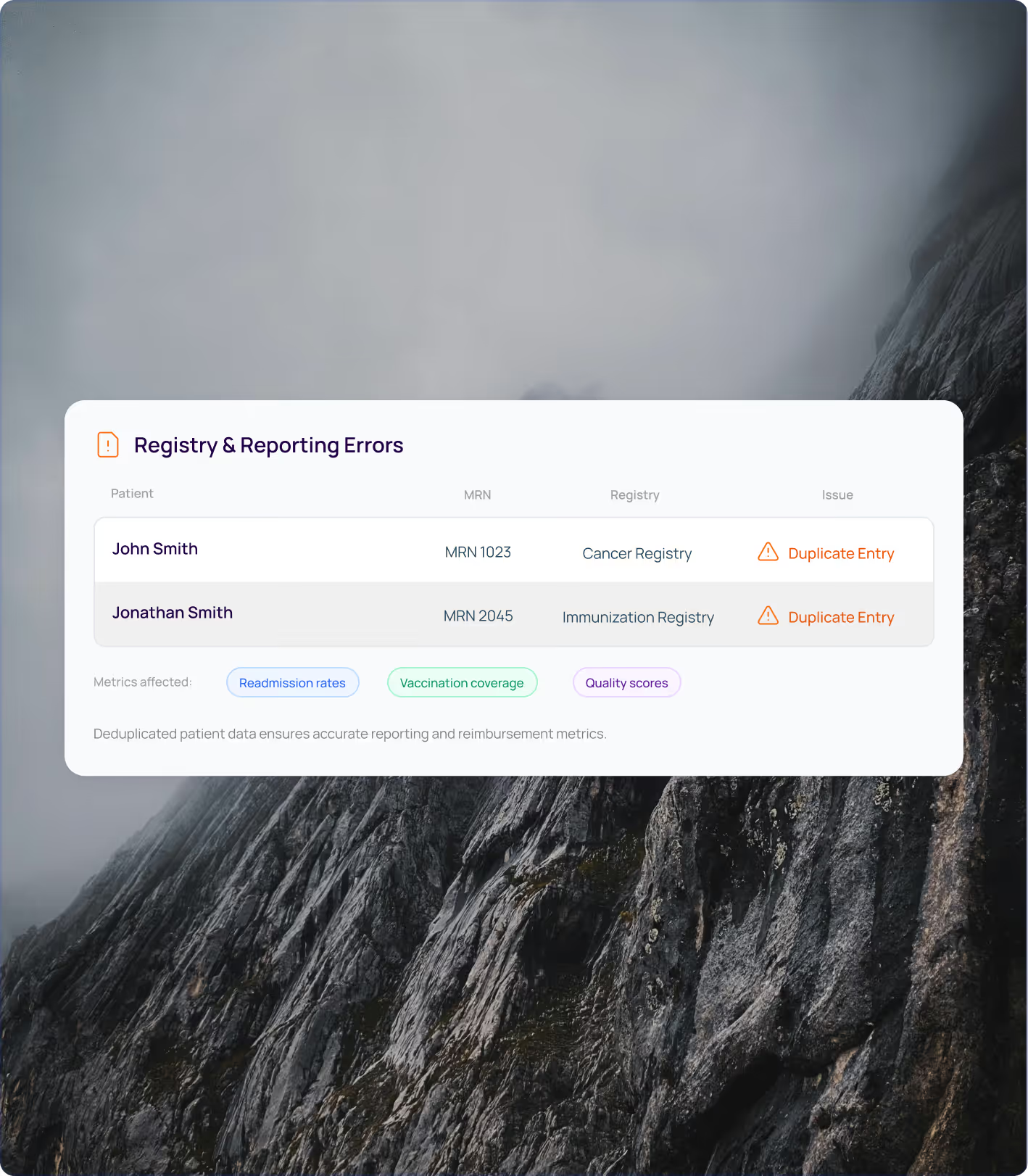
Quality measures, cancer registries, immunization reporting, and population health analytics all depend on accurate patient counts. If the same patient appears twice, they get counted twice. Readmission rates look different. Vaccination coverage percentages shift. Quality scores that determine reimbursement rates are calculated on inaccurate denominators. MatchLogic deduplicates patient records before data is submitted to registries and reporting systems, so the numbers reflect the actual patient population.

Patient matching is harder than standard deduplication because the stakes are higher and the data is messier. Names get misspelled during registration. Dates of birth get transposed. Patients change addresses and phone numbers. Married names replace maiden names. And different systems use different identifier formats.
MatchLogic compares multiple fields at once: first name, last name, middle initial, date of birth, SSN (full or last four), MRN, address, phone number, and any other field in your patient record. A weak match on name combined with an exact match on DOB and a strong match on address produces a high-confidence link. The algorithms handle phonetic similarities ('Steven' vs. 'Stephen'), nickname conversions ('Bill' vs. 'William'), transposed digits in DOBs (03/15/1982 vs. 03/51/1982), and formatting differences across systems.
Every match decision shows the full field-by-field breakdown. Your MPI analysts can review, approve, or override any link before it affects production data.

Patient names are misspelled at registration, entered as nicknames, abbreviated, or changed after marriage. MatchLogic's algorithms catch phonetic similarities (Kathy vs. Cathy), nickname-to-formal conversions (Bill vs. William), abbreviation expansion (Robt. vs. Robert), and transliteration differences in multilingual patient populations. Standard MPI tools miss these consistently.

Date of birth is the single most common matching field in patient data, and it is also the most commonly miskeyed. MatchLogic handles format differences (03/15/1982 vs. 1982-03-15), transposed digits (03/15 vs. 03/51), and partial entries. Combined with SSN last-four matching and MRN cross-referencing, you get high-confidence links even when individual fields have errors.

Before matching begins, MatchLogic scans every field for completeness, format consistency, and uniqueness. You see which fields are reliable for matching (DOB is 99% populated) and which are not (middle name is 42% populated). This prevents you from building match rules on fields that will produce unreliable results.

Patient data cannot leave your environment in most healthcare organizations. MatchLogic deploys as a desktop application or on-premises server. Your data never leaves your network. There is no cloud upload required. The desktop license starts at $13K/yr, making it accessible to health systems, clinics, and health information exchanges that cannot justify six-figure platform costs.
Bring a de-identified patient dataset. We will show you how many duplicates MatchLogic finds, which fields drove each match, and how the confidence scoring works. Every demo uses your data, not ours.
Book a Demo
MatchLogic is not a full MPI platform. It is a matching engine that performs the core function an MPI depends on: identifying which records across multiple systems belong to the same patient. You can use MatchLogic to build or clean your MPI, to deduplicate records before loading them into your MPI, or to run patient matching projects independent of an MPI altogether.
Yes. Patient names are among the messiest datafields in any industry. MatchLogic handles phonetic similarities (Steven vs.Stephen), nickname-to-formal conversions (Bill vs. William, Liz vs. Elizabeth), abbreviated names (Robt. vs. Robert), hyphenated and maiden names, and transliteration differences in multilingual populations. These are the exactvariations that cause most MPI duplicate rates to creep above acceptable thresholds.
No. MatchLogic deploys as a desktop application or on-premises server. Your patient data stays in your environment. There is no cloud upload, no external data transmission, and no third-party access. This is a requirement for most healthcare organizations, and we built the product to support it from the start.
Date of birth is the most commonly miskeyed field in patient registration. MatchLogic handles format differences (MM/DD/YYYY vs. YYYY-MM-DD), transposed day and month (03/15 vs. 15/03), transposed digits within fields (1982 vs. 1928), and partial entries where only month and year are available. DOB matching is weighted alongside name, address, and identifier fields so a single DOB error does not prevent an otherwise strong match.
Yes. Health systems often have different MRN formats, different SSN storage conventions (full vs. last four), and different insurance ID structures across facilities and platforms. MatchLogic normalizes these identifiers during the matching process and matches across formatdifferences. You do not need to standardize your identifiers before loading them.
MatchLogic starts at $13,000 per year for adesktop license, which handles project-based patient matching anddeduplication. Server deployments for team access and recurring matching startat $45,000 per year. API access for embedding matching into your data pipelinesstarts at $85,000 per year. All options are typically 90% less than enterprise MPI platforms or matching modules from Informatica and IBM.

.svg)