Compare two datasets. Find every overlap, gap, and conflict between them.

You have a list of 3 million customer records in your CRM and 2.8 million in your billing system. Which ones match? Which exist in one system but not the other? Where do the matched records disagree on address, phone, or account status? matchlogic cross-references datasets at scale and tells you exactly what lines up and what doesn't.

Fortune 500 companies that depend on matchlogic

We had two datasets that were supposed to represent the same population, and they disagreed on almost everything. matchlogic showed us exactly where the overlaps were, where the gaps were, and where matched records had conflicting data. We went from guessing to knowing in a few days.

Chantale Boulanger
Director, Industrial Alliance
96%
Average matching accuracy across all deployments
10%+
More matches found compared to alternative solutions
Day 1
Match results from first data load, no training period
90%
Less expensive than Informatica, IBM, and Ataccama

VLOOKUP works when IDs match. Your IDs almost never match.

Cross-referencing two datasets sounds simple until you try it. The same person is 'Robert J. Smith' in one system and 'Bob Smith Jr.' in the other. The same company is 'ABC Industries LLC' in your file and 'ABC Ind.' in theirs. Exact-match lookups and JOIN statements miss these entirely. matchlogic uses fuzzy matching algorithms to find the real overlaps between datasets, even when names, addresses, and identifiers don't line up exactly.

What you miss when cross-referencing stops at exact match

Every team that compares datasets across systems runs into the same wall. Select a scenario to see how exact-match limitations create real business problems.

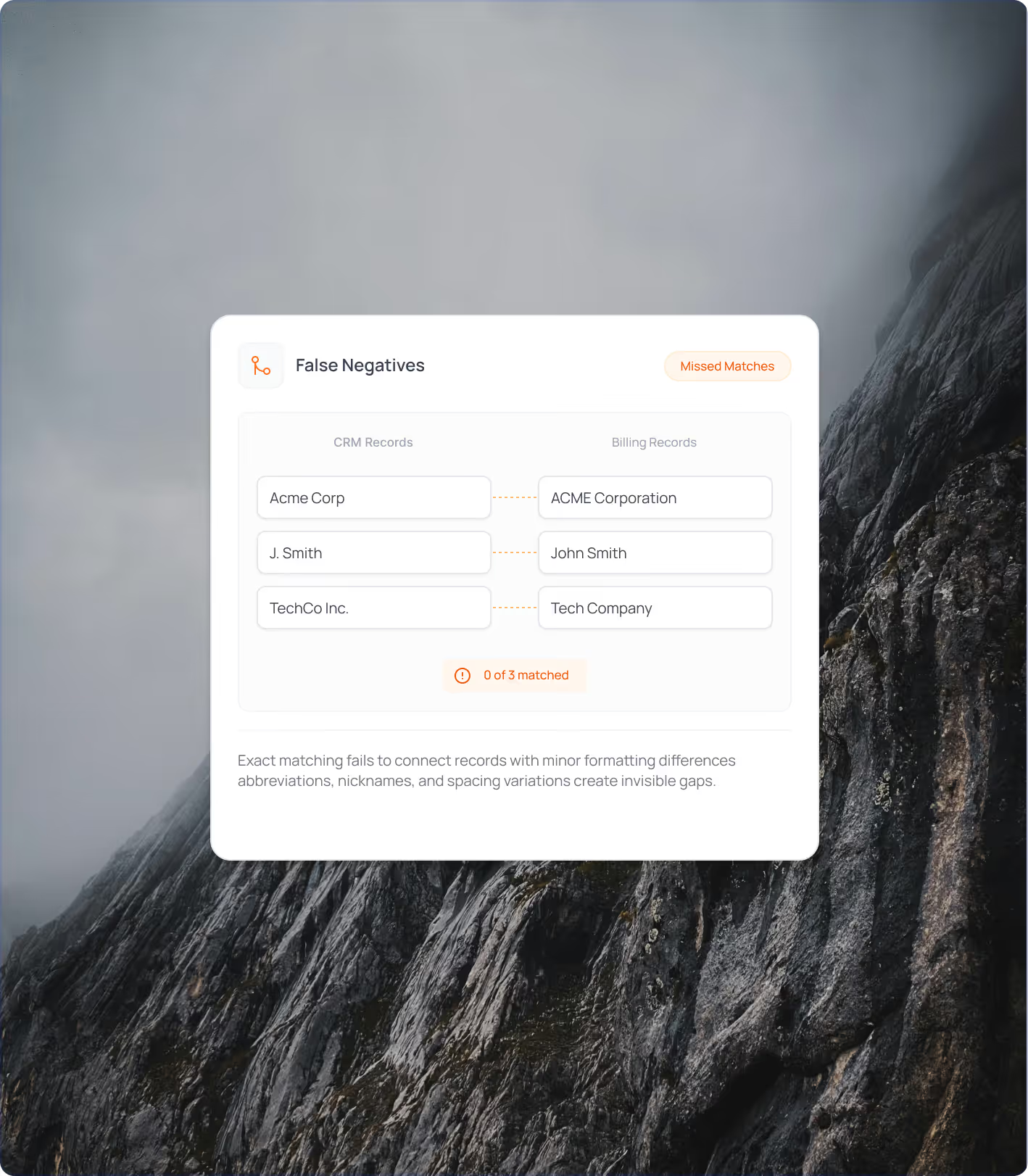
False Negatives

You compare your CRM against an external list and get a 62% match rate. Looks like 38% of the records are unique to one file. But a meaningful percentage of those "non-matches" are actually the same entity recorded differently. 'Johnson & Johnson' didn't match 'J&J'. 'Catherine Williams' didn't match 'Kathy Williams'. '123 Main St, Ste 200' didn't match '123 Main Street, Suite 200'. Every missed match is a false negative that distorts whatever analysis, outreach, or reconciliation depends on the comparison.

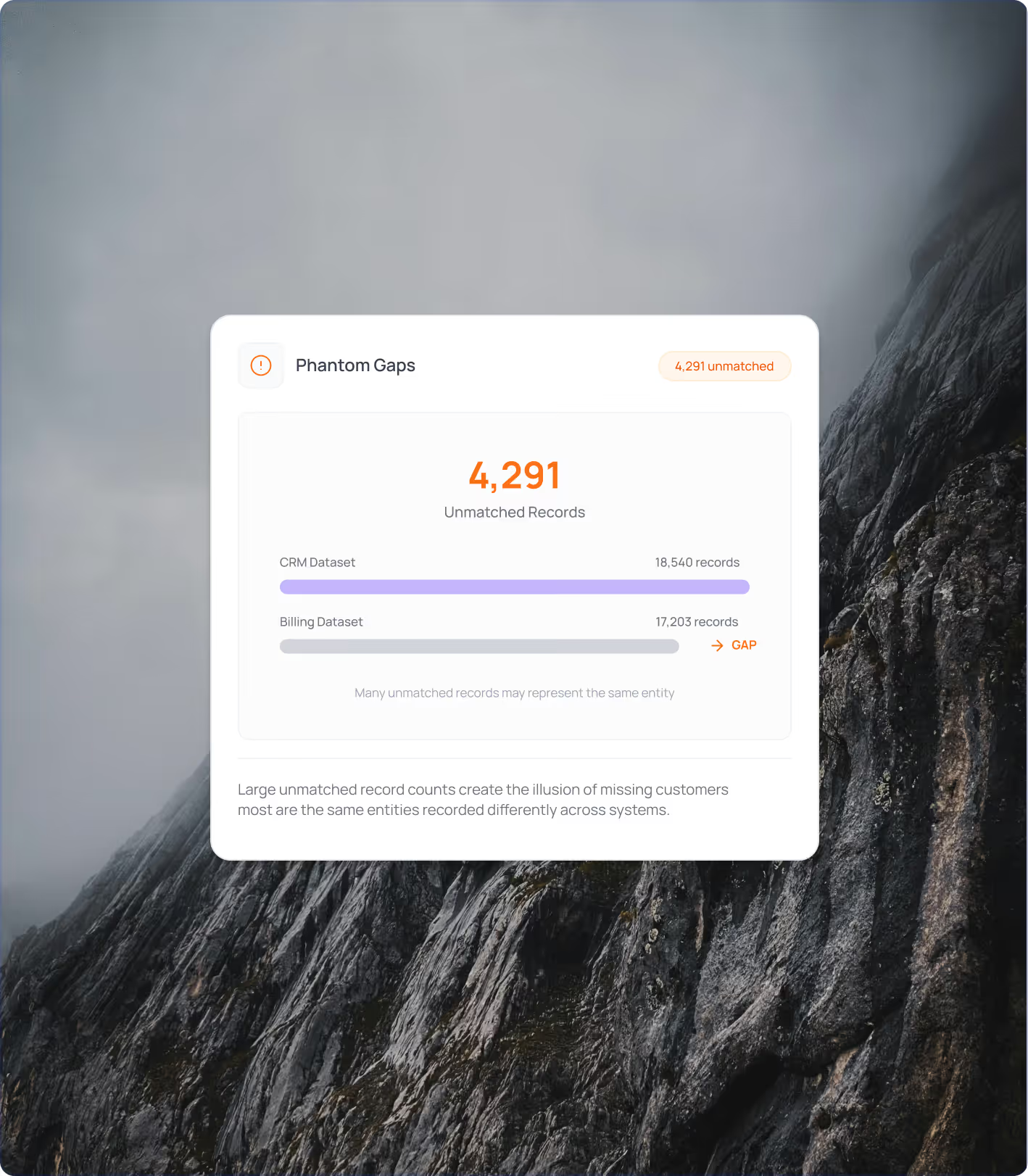
Phantom Gaps

Two reps call the same account because it exists under two different company names. Territory assignments overlap when the CRM can't tell that 'Johnson & Johnson' and 'J&J Inc.' are the same buyer. Pipeline reports show phantom opportunities because a single deal is logged against duplicate contact records. Revenue forecasting suffers when the data underneath it has no integrity.

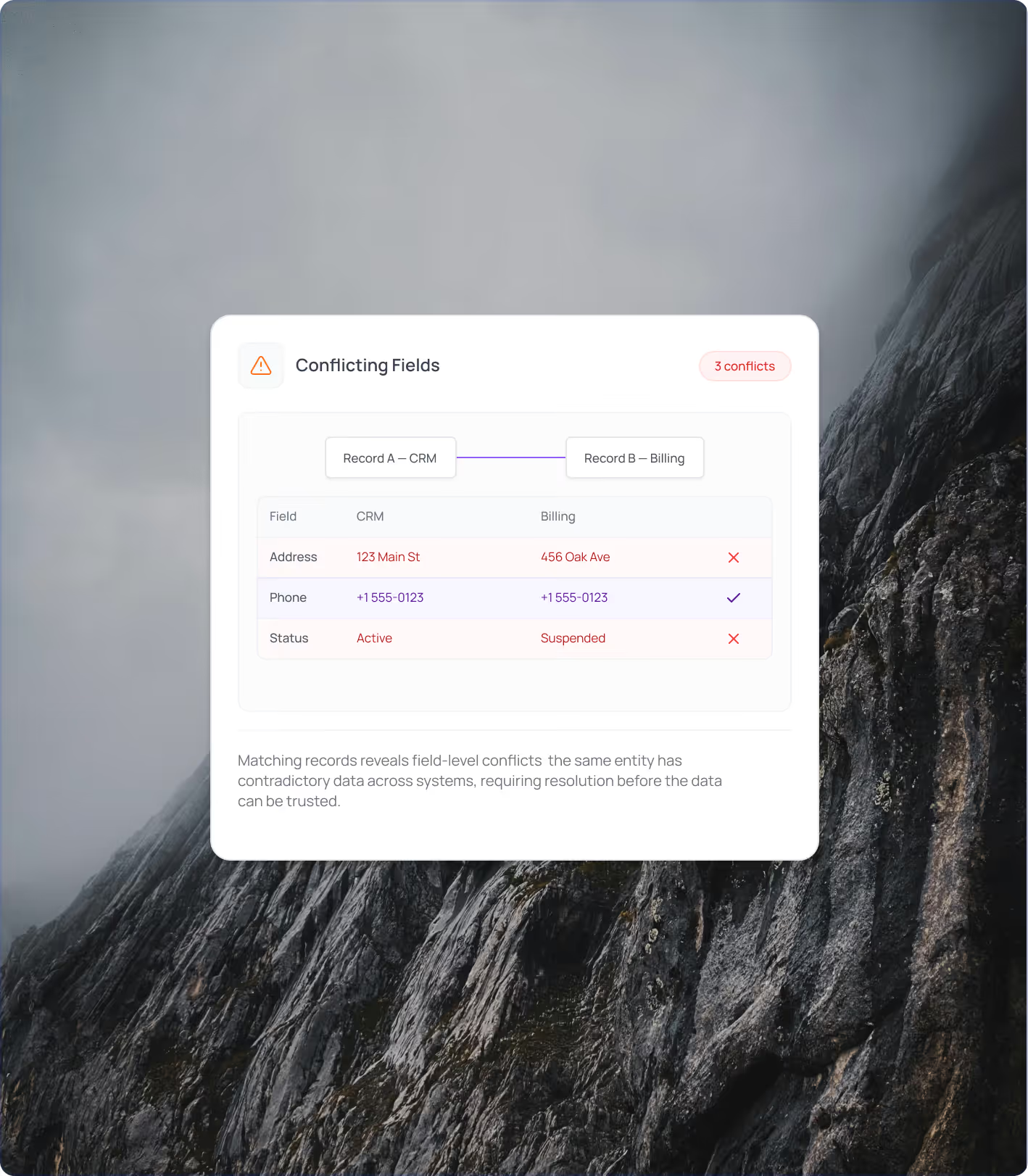
Conflicting Fields

Two records match on name but disagree on address. Or they match on address but have different phone numbers. Or the account status says 'Active' in one system and 'Suspended' in the other. These field-level conflicts matter, but you can only find them after you've successfully matched the records in the first place. If your matching tool misses the pair entirely, the conflict never surfaces and both systems continue operating with contradictory data about the same entity.

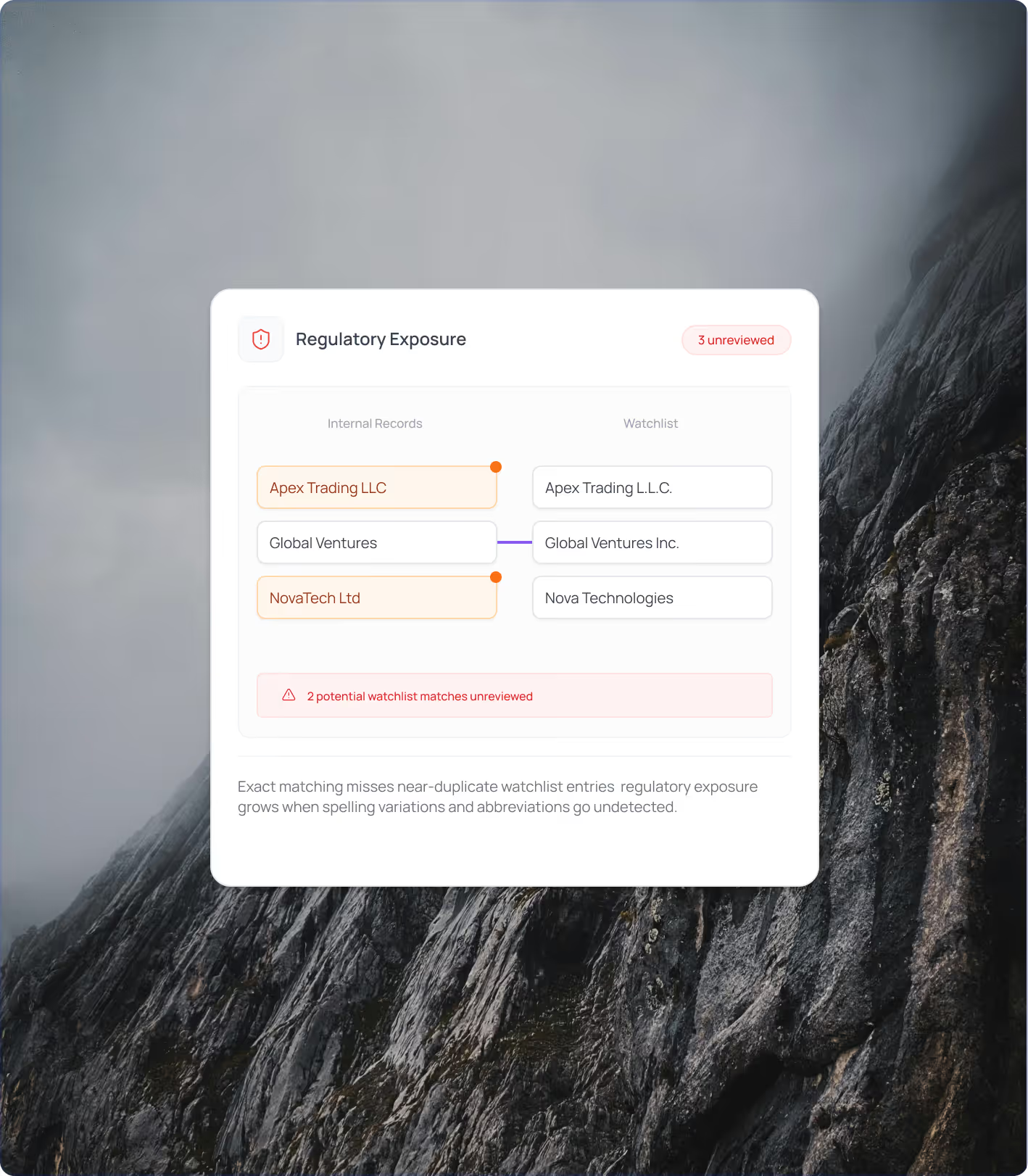
Regulatory Exposure

Regulations like GDPR and CCPA require organizations to honor data subject requests across every system. If a customer exists as three separate records, a deletion request might only remove one. Incomplete compliance exposes the organization to fines and audit findings. Duplicate records are a direct liability when regulators come looking.

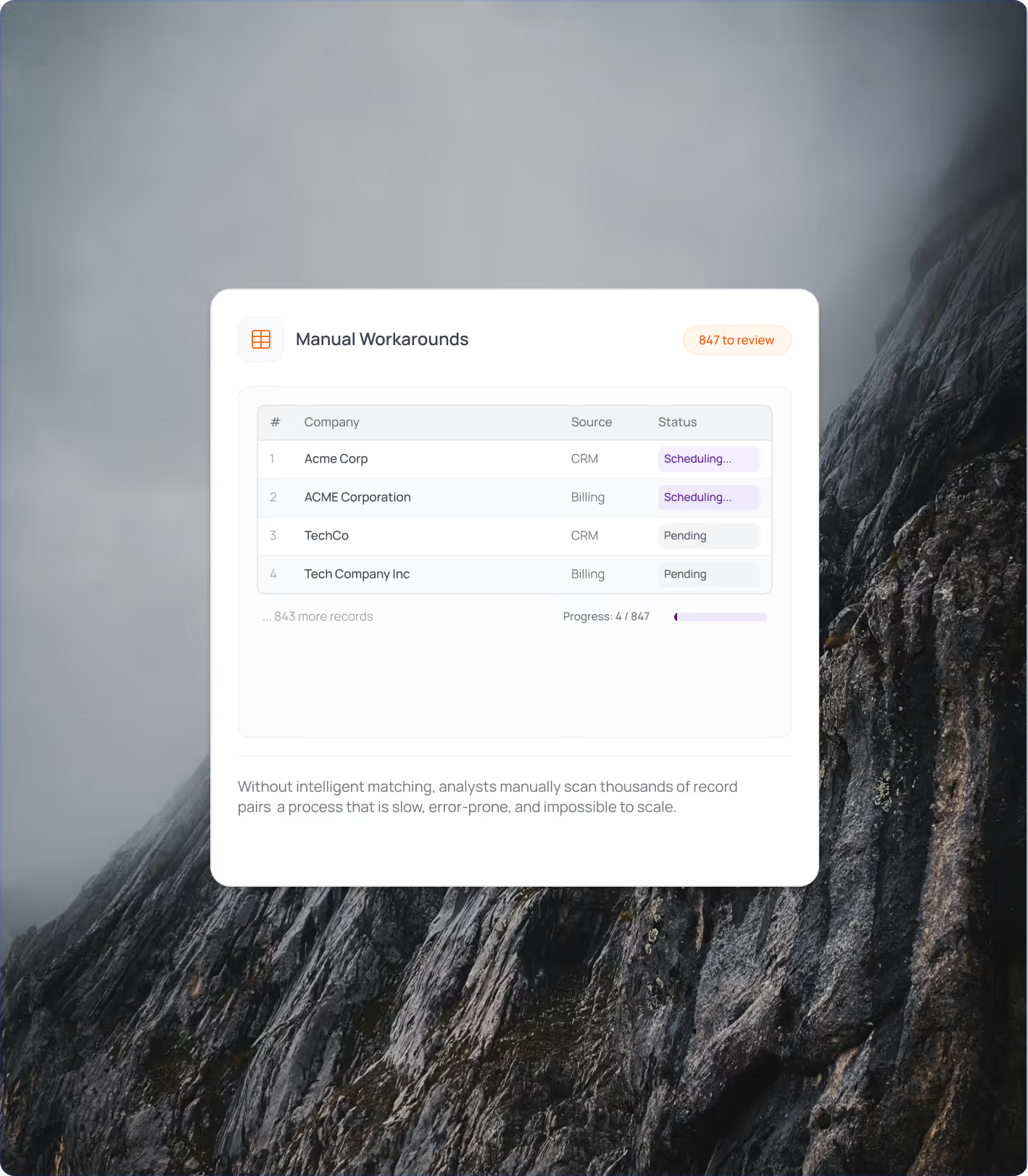
Manual Workarounds

The new ERP connects to downstream systems through APIs and data feeds. Those integrations assume clean, deduplicated master data. When a customer record exists three times in the new system, downstream processes break in unpredictable ways: order management routes to the wrong account, billing sends invoices to outdated addresses, support tickets open against phantom customer profiles. Every integration point becomes a potential failure point when the underlying data has duplicates.

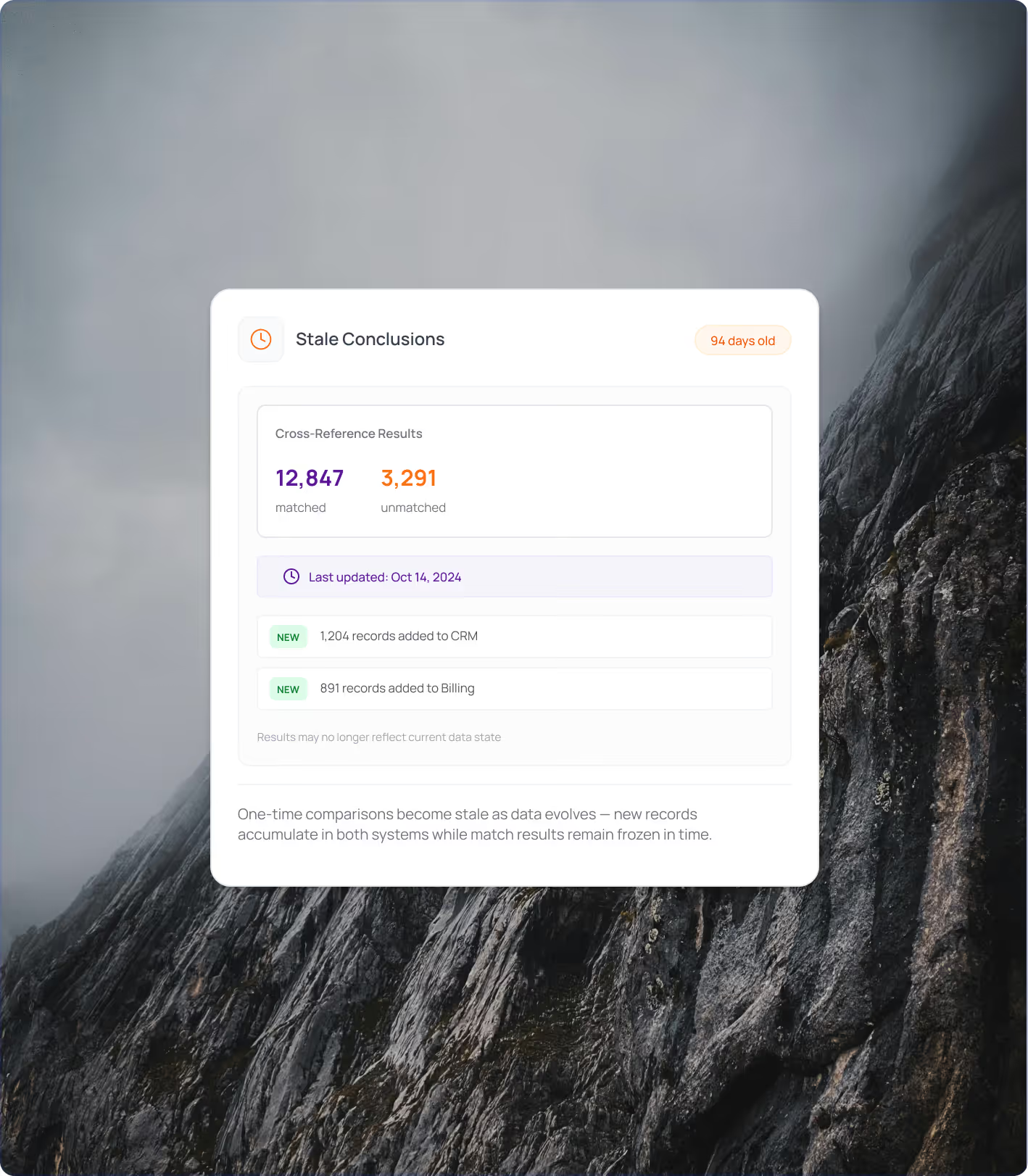
Stale Conclusions

Regulatory reporting depends on accurate, complete, unduplicated records. When customer records are fragmented across the new system, GDPR data subject access requests miss entries. CCPA deletion requests leave orphaned records behind. Financial reporting aggregates the same transactions under different entity IDs. Auditors flag the discrepancies. The new system that was supposed to improve compliance posture has made it worse because the data it ingested was never reconciled.

See exactly what overlaps, what's missing, and where matched records disagree

matchlogic loads both datasets into a single project and runs configurable fuzzy matching across every record pair. The output categorizes every record into one of three buckets: matched (exists in both datasets), unique to Dataset A, or unique to Dataset B.

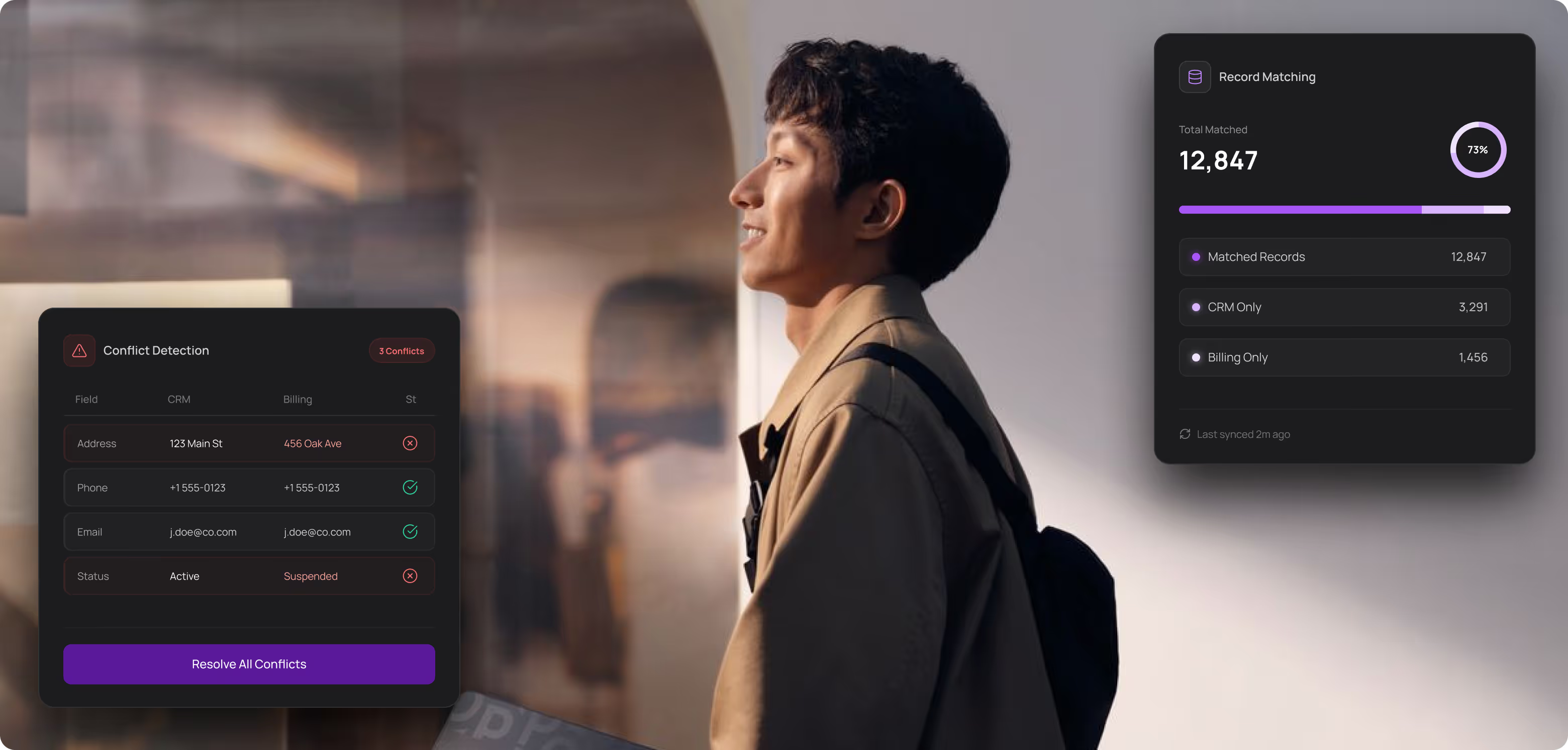
For matched pairs, matchlogic shows field-level agreement and disagreement. If two records match on name and phone but have different addresses, the platform flags the address as a conflict and shows both values side by side. You decide which value survives, or you flag it for investigation. These field-level conflict reports are often more valuable than the match itself, because they expose where your systems have been quietly contradicting each other.

Every match decision is transparent. You see the confidence score, the fields that contributed, and the weight each field carried. If a match scored 84% because name contributed 36 points, address contributed 28 points, and phone contributed 20 points, that breakdown is visible. You can adjust thresholds and rerun the comparison in minutes if the results are too loose or too strict.

The result is a complete, auditable picture of how two datasets relate to each other, with no manual spreadsheet eyeballing required.

Compare any two datasets with full matching precision

One platform handles profiling, fuzzy matching, conflict detection, and gap analysis across any pair of datasets from any source.

Match across name variations, misspellings, and format differences

matchlogic catches 'Robert' vs. 'Bob', 'ABC Industries LLC' vs. 'ABC Ind.', and '123 Main St Ste 200' vs. '123 Main Street Suite 200'. Phonetic matching, abbreviation expansion, and character transposition handling find the pairs that exact-match tools miss entirely.

Flag field-level conflicts between matched records

When two records match on name but disagree on address, phone, status, or any other field, matchlogic highlights the conflict and shows both values. You get a conflict report that tells you exactly where your two datasets contradict each other, not just where they overlap.

Profile both datasets before comparing them

Before matching begins, matchlogic profiles each dataset for completeness, uniqueness, format patterns, and anomalies. You see whether one file has 90% address fill rates and the other has 40% before you commit to matching on address. Profiling prevents bad matching decisions.

Run the same comparison repeatedly with consistent rules

Save your matching configuration and rerun it whenever datasets update. Weekly watchlist checks, monthly list reconciliations, or quarterly data audits all use the same rules, thresholds, and field weights. Results are comparable across runs because the methodology is identical.

Teams that stopped guessing and started cross-referencing with precision

Learn how the Virginia Department of Education cross-referenced student records across district databases statewide, identifying overlaps and gaps that had accumulated across years of independent data entry by hundreds of school districts.

Read the full story

Cross-referenced policyholder records against claimant databases across insurance product lines, catching name and address variants that exact-match reconciliation had missed.

Read story

Compared benefits recipient records across state agency databases to identify individuals enrolled in multiple programs under variant name spellings and address formats.

Read story

Cross-referenced customer records across regional shipping databases spanning 220+ countries, resolving multilingual name and address variations at global scale.

Read story

Watch Cross-Reference Matching in Action

See how matchlogic compares two datasets, identifies overlaps and gaps, and highlights field-level conflicts in a 3-minute walkthrough. Bring two files you need to compare and we'll run them live.

Schedule a Demo

Frequently Asked Questions

What does entity resolution reveal about my data?

Entity resolution shows exactly how your records connect to real-world entities. You'll see which fragments belong together, where identity variations hide, and how records cluster. Visual entity maps highlight relationships across all your systems before any data changes, giving you full control over identity unification.

How fast can matchlogic resolve large datasets?

matchlogic resolves 10 million records in under 8 minutes, linking fragments and clustering related entities at scale. The engine analyzes every field, calculates match confidence, groups related records, and generates visual entity maps without performance issues.

What identity variations does resolution typically find?

Most companies discover 30-40% entity fragmentation they never knew existed. Resolution catches nicknames hiding as formal names, typos creating false duplicates, and company abbreviations splitting single entities. These variations cost real money in duplicate processes.

How does entity resolution differ from deduplication?

Deduplication removes exact duplicates within one dataset. Entity resolution links related records across multiple systems to real-world entities - even when names, formats, and identifiers vary. You get unified profiles showing the complete picture of each customer, vendor, or contact.

Can I preview resolution results before committing?

Yes - see exactly how records will cluster before any data changes. Visual previews show entity groups with confidence scores highlighted. Review field-by-field evidence, adjust matching rules, and approve results. Nothing changes until you confirm the resolution output.

Can entity resolution help with compliance?

Entity resolution creates unified customer identities for GDPR right-to-access requests, KYC verification, and AML screening. Track which records belong to each entity, prove proper identity management for audits, and maintain evidence trails showing how identities were resolved.

Send us two files you need to compare. We'll show you every overlap your current tools are missing.

Partnering with you for expert onboarding, dedicated support, and lasting data confidence.

The Future of Data Quality. Delivered Today.

Thank you! Your submission has been received!
Oops! Something went wrong while submitting the form.
By subscribing you give consent to receive matchlogic newsletter.