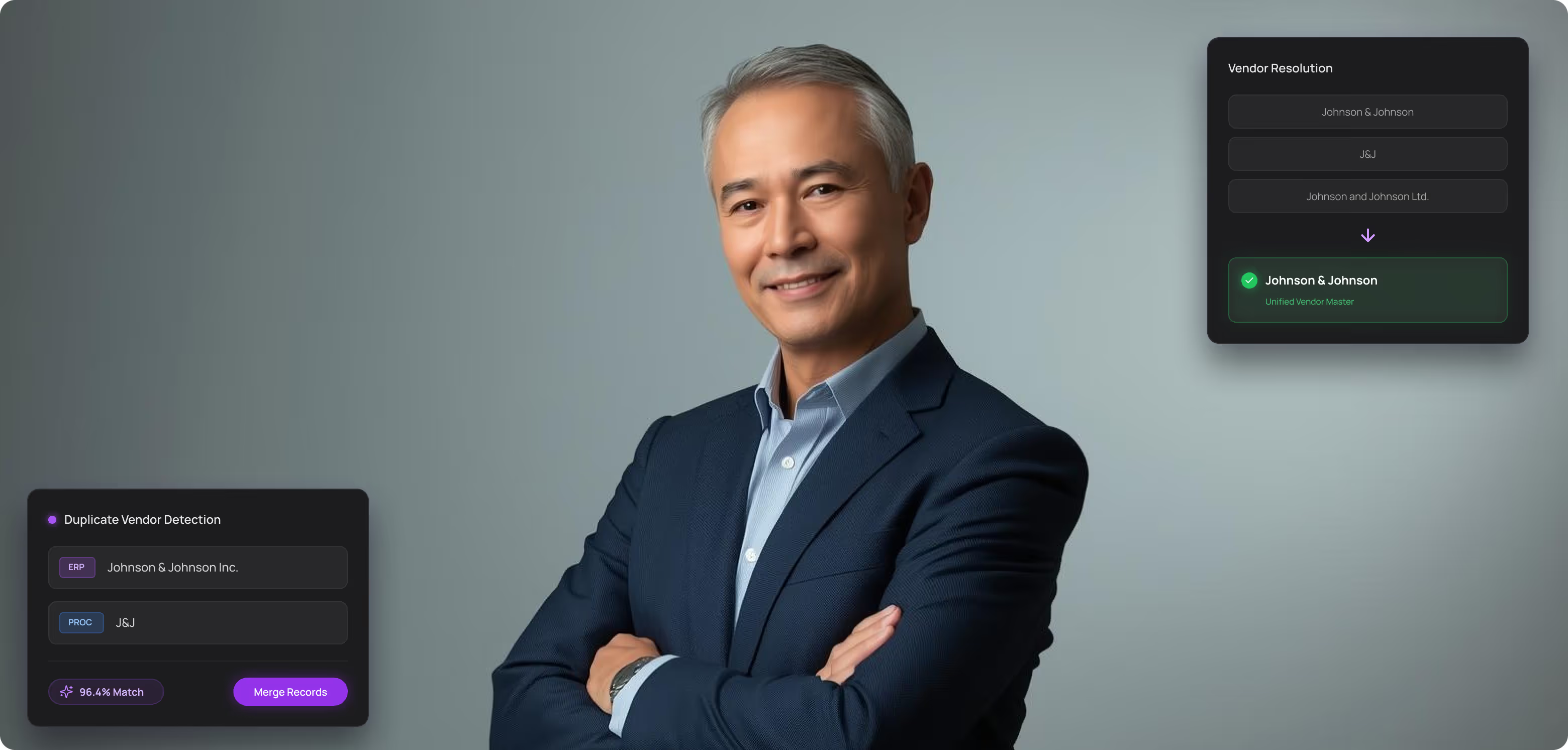
Your ERP has 1.4 million supplier records. Your procurement tool has 1.1 million. Your AP system has 1.6 million. Hundreds of thousands of them are the same vendor entered three different ways. matchlogic finds the overlaps and unifies them into a single, accurate vendor master.
.avif)
.avif)
.avif)
.avif)
.avif)
We thought we had 800,000 vendors. After matchlogic ran, we had 520,000. The rest were duplicates spread across three procurement systems that nobody had connected before.

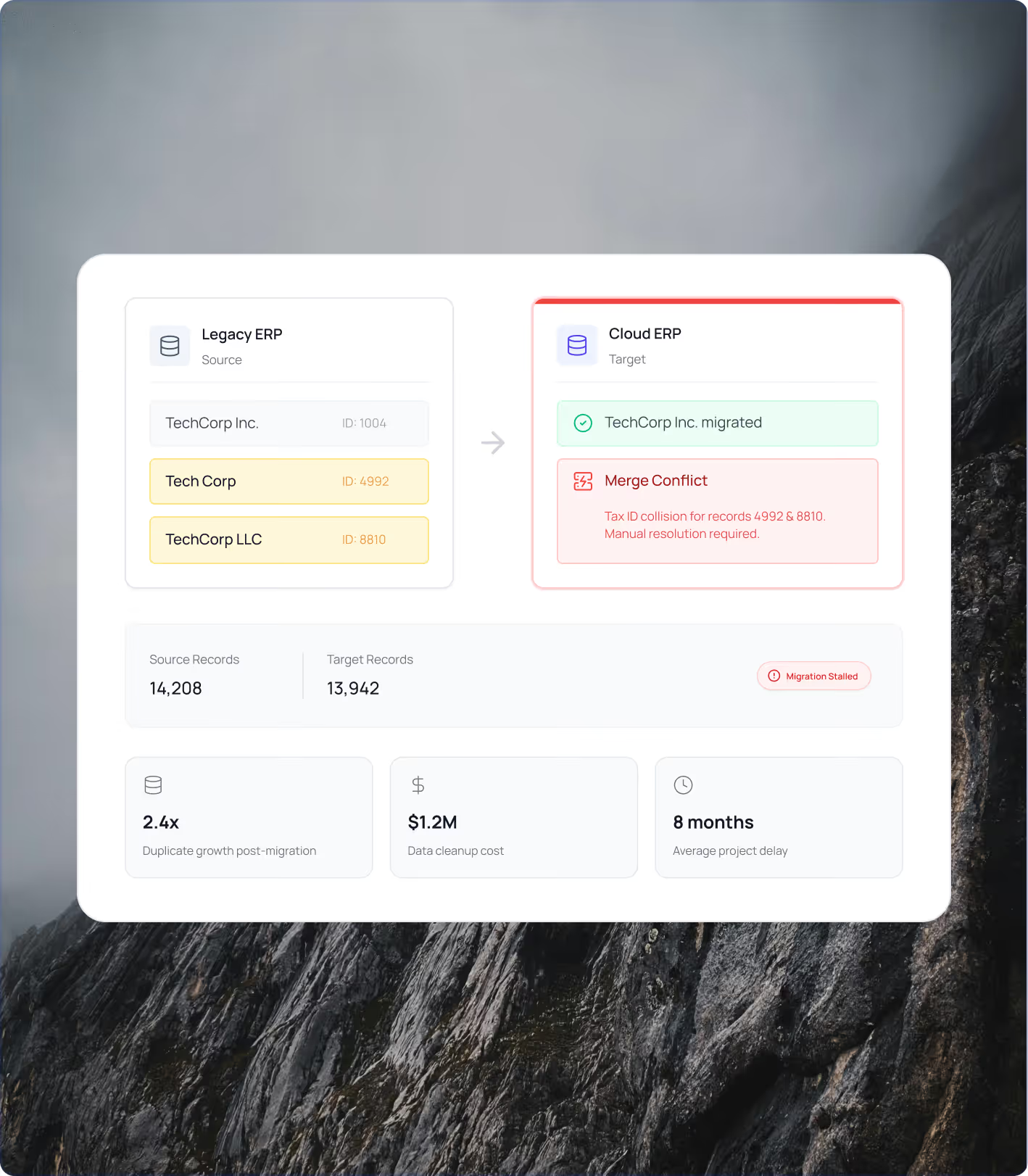
Duplicate vendor records cause duplicate payments, inflated supplier counts, missed volume discounts, and failed audits. Most organizations don't know the problem exists until a finance review or a system migration forces them to look. matchlogic profiles, standardizes, and matches vendor data across every procurement and ERP system so you can consolidate spend and trust your supplier records.
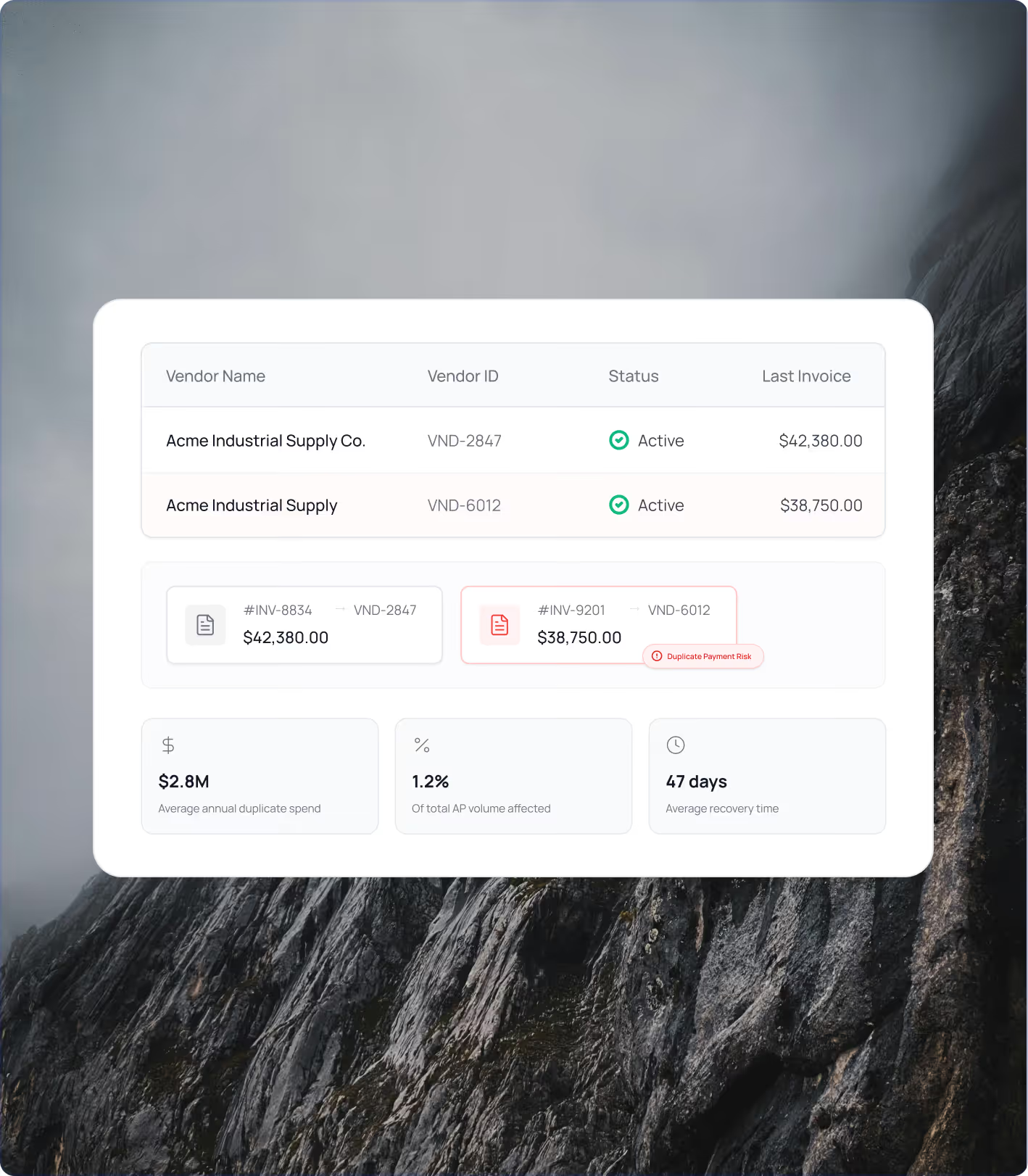
When the same vendor exists under multiple records, purchase orders and invoices can route to different profiles. Accounts payable processes the same invoice twice because the system treats 'Acme Corp' and 'Acme Corporation Inc.' as two separate suppliers. These overpayments rarely surface on their own. They accumulate quietly until someone reconciles manually or an auditor catches them. By then, the clawback process is expensive and the vendor relationship is strained.

Volume-based pricing depends on accurate spend aggregation. If your organization buys $20M from a vendor but the spend is split across three duplicate records, your procurement system reports three suppliers at $7M, $8M, and $5M. None of them individually hit the volume threshold that triggers a discount tier. The vendor knows exactly how much you spend. Your own systems don't.

Every dashboard built on top of duplicated customer records shows the wrong numbers. Customer count, average order value, lifetime value, churn rate: all of these metrics shift when records that should be merged are counted separately. Leadership makes decisions on data that overstates the customer base and understates per-customer revenue.
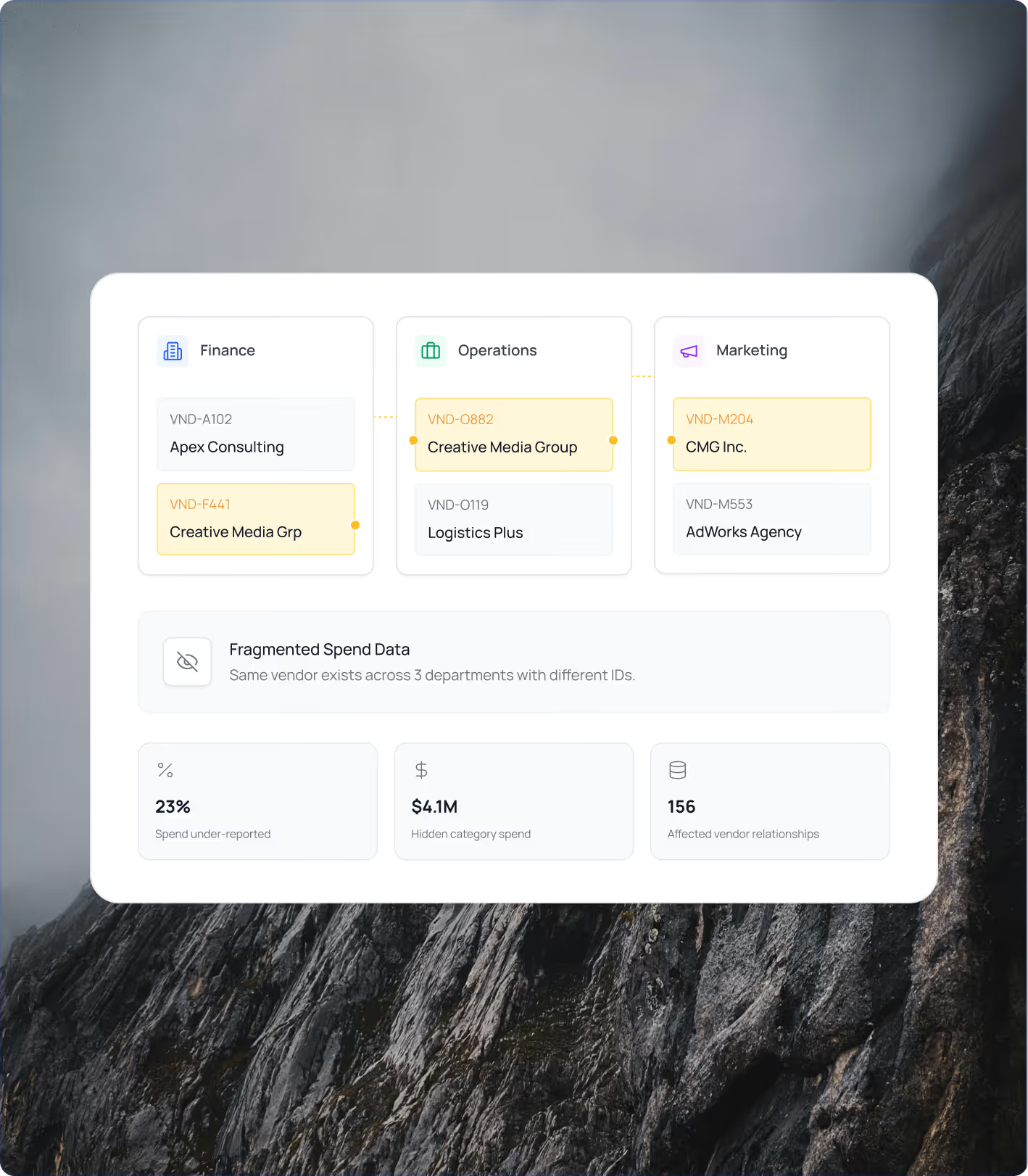
Strategic sourcing requires knowing who you buy from and how much. When vendor records are fragmented, procurement teams can't build an accurate picture of total supplier spend. Category managers make decisions based on incomplete data. Supplier risk assessments miss concentration risks because the same vendor shows up as three separate entries with three different risk profiles. Every procurement strategy built on a dirty vendor master starts with a wrong assumption.

Duplicate customer records mean duplicate outreach. The same person receives the same email three times, each addressed to a slightly different version of their name. Segmentation breaks because one customer appears in multiple cohorts. Campaign performance metrics inflate when three records count as three conversions instead of one. Marketing teams lose budget and credibility to data they cannot trust.
Duplicate customer records mean duplicate outreach. The same person receives the same email three times, each addressed to a slightly different version of their name. Segmentation breaks because one customer appears in multiple cohorts. Campaign performance metrics inflate when three records count as three conversions instead of one. Marketing teams lose budget and credibility to data they cannot trust.
Customer records have reliable anchors: email addresses, phone numbers, dates of birth. Vendor records rarely have any of these. What you get instead is a company name with dozens of legitimate variations, a mix of legal names and trade names, abbreviations that differ by region, and addresses that change when a vendor moves offices.
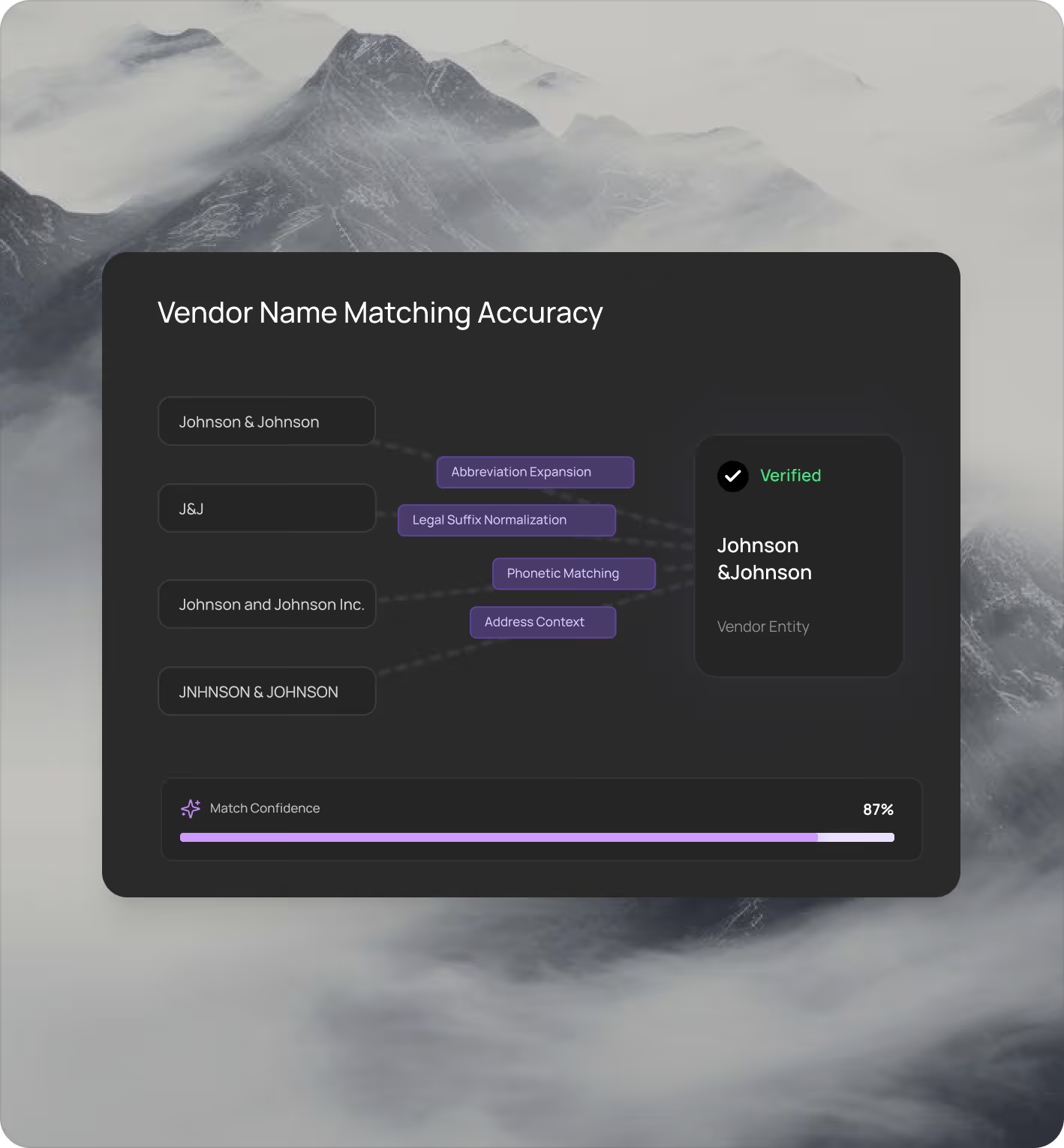
'Johnson & Johnson', 'J&J', 'Johnson and Johnson Inc.', and 'JNHNSON & JOHNSON' might all be the same vendor. Or 'Johnson & Johnson' could be a janitorial supplier in Tampa and also a multinational pharmaceutical company. Matching vendor records requires combining name similarity with contextual signals like address, tax ID fragments, payment history, and category codes.
matchlogic's algorithms handle abbreviation expansion, legal suffix normalization (Inc., LLC, Corp., Ltd.), character transpositions, and phonetic matching across multilingual vendor names. Every match decision shows exactly which fields contributed and at what weight, so procurement teams can verify results before merging.
You see the reasoning behind every match. Your auditors see it too.

matchlogic expands 'J&J' to 'Johnson & Johnson', strips and standardizes suffixes like Inc./LLC/Corp./GmbH, and handles the variations that accumulate when vendors are entered by different people in different systems over years.

Before any matching begins, matchlogic scans your vendor master for completeness gaps, format inconsistencies, frequency anomalies, and duplicate patterns. You see exactly where the data is weakest before deciding how to clean and match it.

Load vendor data from SAP, Oracle, Coupa, Ariba, or any flat file export. matchlogic matches across all sources in a single project, linking records that refer to the same supplier regardless of which system or format they came from.

Adjust field weights, confidence thresholds, and blocking keys through a visual interface. Decide how much weight to give name similarity vs. address vs. tax ID. Data quality managers run the process without writing code or waiting on engineering.
See how matchlogic identifies, scores, and resolves duplicate vendor records in a 3-minute walkthrough. Bring your own vendor file and we'll run it live during the demo.
Schedule a Demo
Entity resolution shows exactly how your records connect to real-world entities. You'll see which fragments belong together, where identity variations hide, and how records cluster. Visual entity maps highlight relationships across all your systems before any data changes, giving you full control over identity unification.
matchlogic resolves 10 million records in under 8 minutes, linking fragments and clustering related entities at scale. The engine analyzes every field, calculates match confidence, groups related records, and generates visual entity maps without performance issues.
Most companies discover 30-40% entity fragmentation they never knew existed. Resolution catches nicknames hiding as formal names, typos creating false duplicates, and company abbreviations splitting single entities. These variations cost real money in duplicate processes.
Deduplication removes exact duplicates within one dataset. Entity resolution links related records across multiple systems to real-world entities - even when names, formats, and identifiers vary. You get unified profiles showing the complete picture of each customer, vendor, or contact.
Yes - see exactly how records will cluster before any data changes. Visual previews show entity groups with confidence scores highlighted. Review field-by-field evidence, adjust matching rules, and approve results. Nothing changes until you confirm the resolution output.
Entity resolution creates unified customer identities for GDPR right-to-access requests, KYC verification, and AML screening. Track which records belong to each entity, prove proper identity management for audits, and maintain evidence trails showing how identities were resolved.

.svg)