Profile your data. Match your records. Build your golden record.

Your customer, vendor, and product records are scattered across systems with misspelled names, inconsistent formats, and conflicting identifiers. MatchLogic profiles every field in your dataset, standardizes the values through a visual pipeline, matches records using proprietary fuzzy algorithms, and produces a deduplicated golden record your entire organization can trust. 96% accuracy. Results on day one.

Fortune 500 companies that depend on matchlogic

Seven steps from messy data to golden record. One platform.

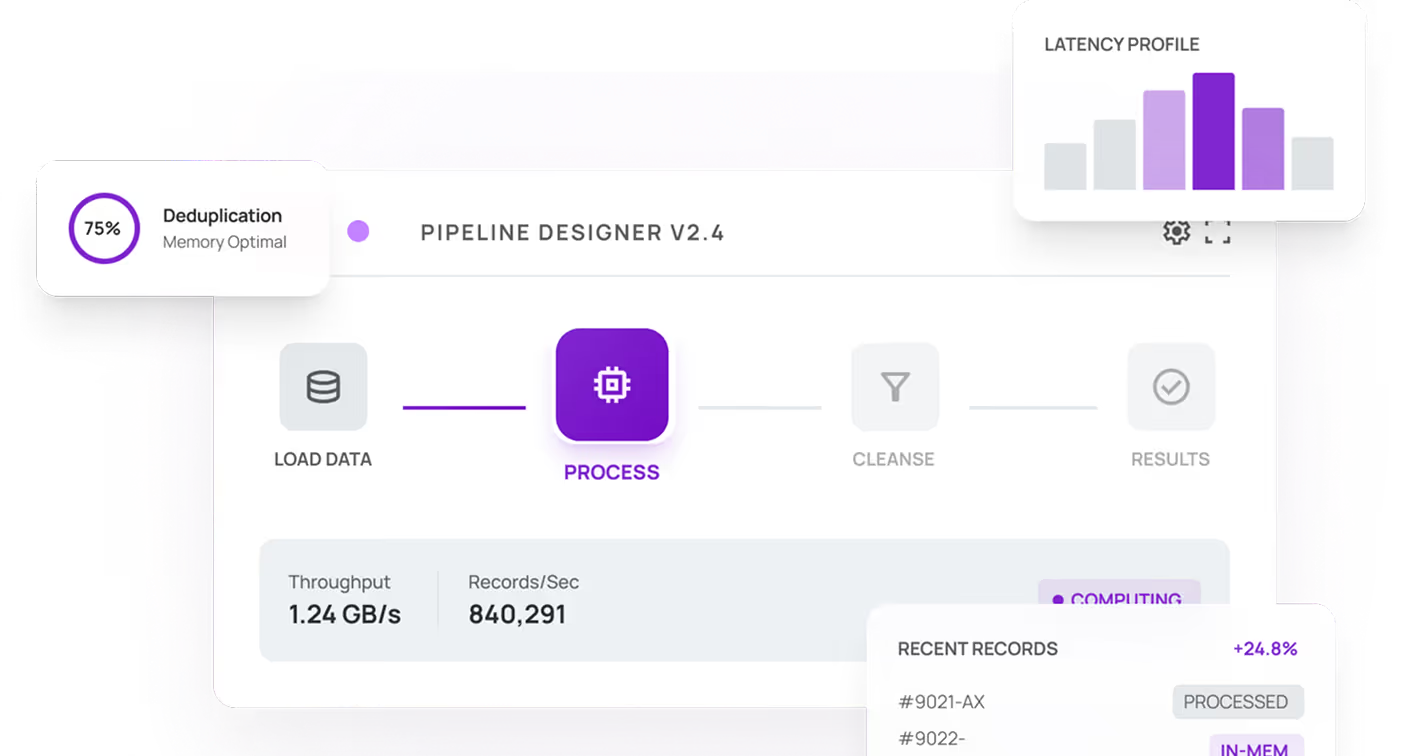
MatchLogic walks your data through a visual pipeline. Each step builds on the last. You can review, adjust, and re-run at any point without starting over. And once you have it right, the Workflow Scheduler automates the entire process going forward.

Import

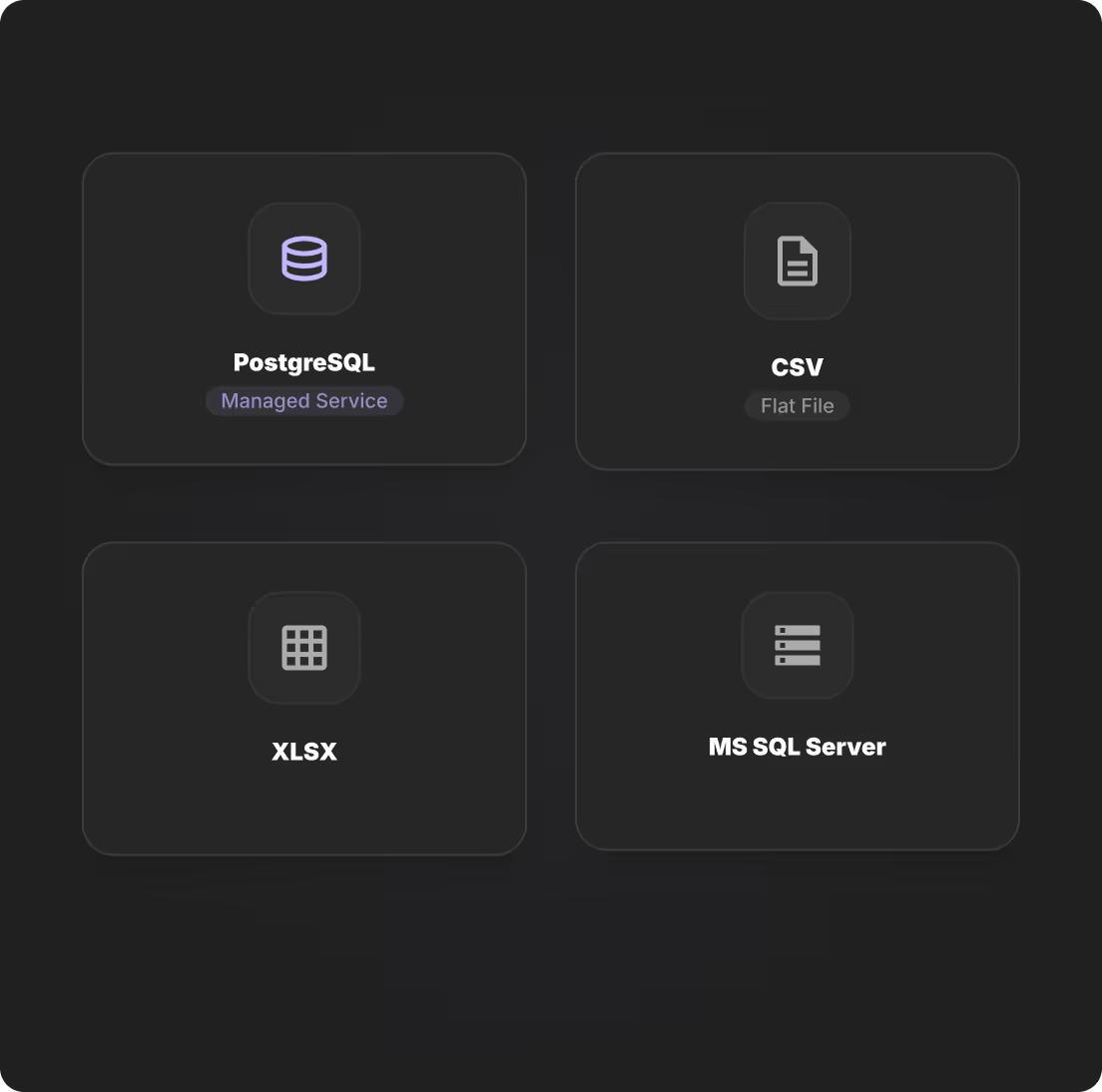
Connect to virtually any data source: databases (SQL Server, Oracle, Teradata, MySQL), CRMs (Salesforce), cloud platforms, flat files (CSV, Excel, tab-delimited), JSON, and more through native connectors or ODBC. Pull records from multiple sources into a single project. No reformatting required. MatchLogic handles the schema differences.

Profile

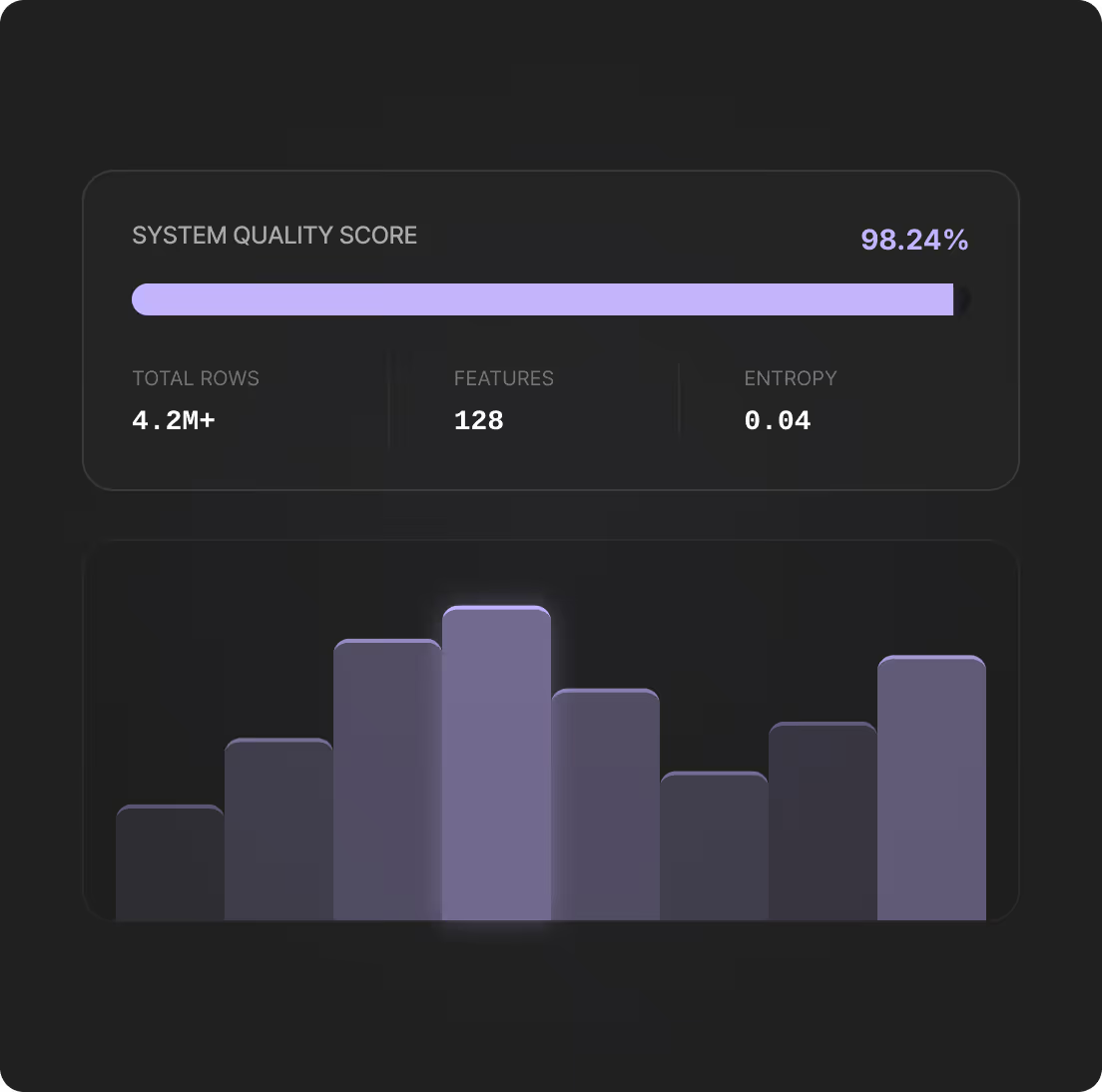
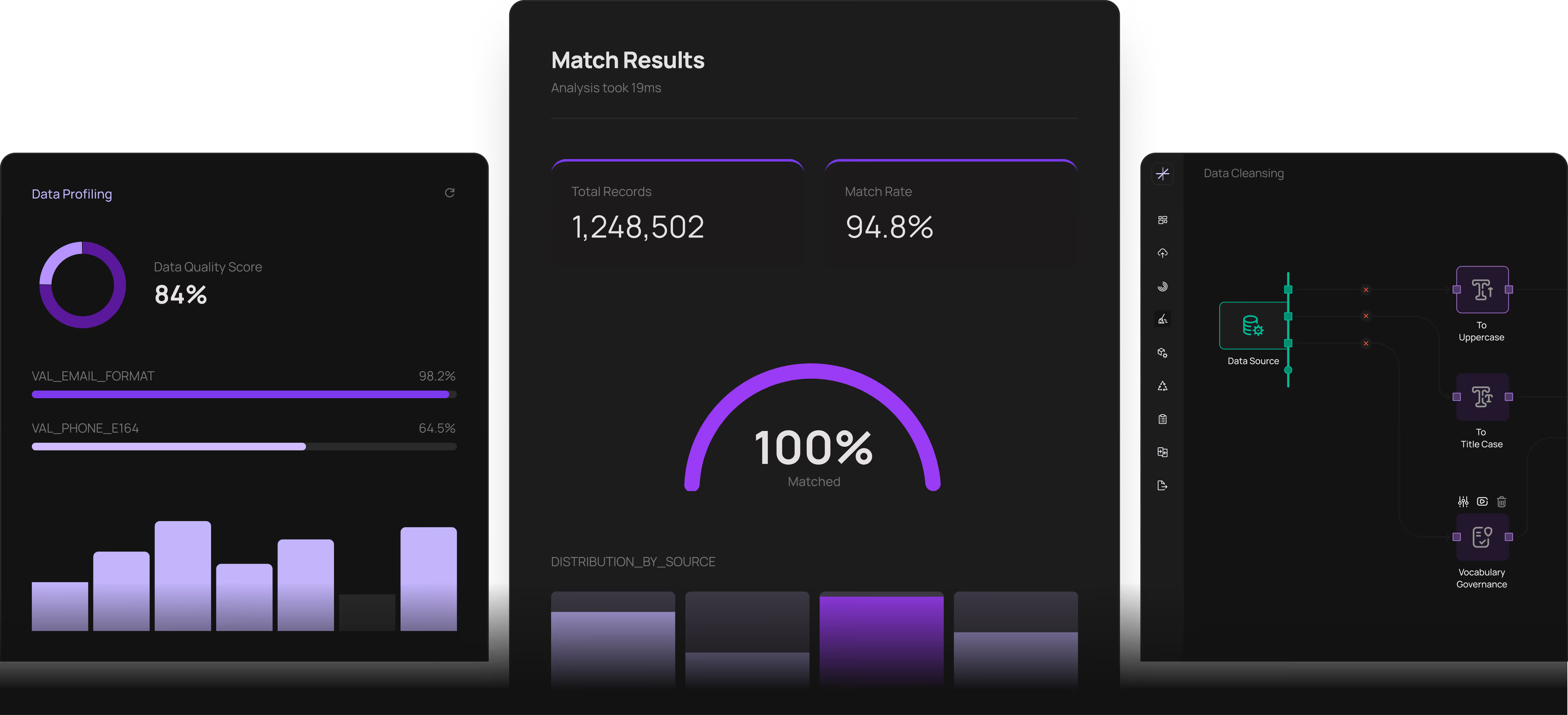
Before you clean or match anything, you need to understand what you are working with. MatchLogic scans every column and generates a detailed analysis: data type detection, field length distribution, completeness and null rates, distinct value counts, character composition, entropy scores, anomaly detection, min/max/median/mode values, and semantic classification (is this column a name, an address, an identifier, a currency amount, a date?).

The profiler also runs the Wordsmith tool, which shows the most frequently occurring words in any column and their counts. This is how you spot standardization opportunities before writing a single rule: you see that 'LLC' appears 4,200 times, 'L.L.C.' appears 310 times, and 'Limited Liability Company' appears 47 times. You know exactly what to clean.
Profiling tells you which fields are reliable enough to use as match criteria and which are too sparse or inconsistent. Building match rules on a field that is only 40% populated produces bad results. The profiler prevents that mistake before you make it.

Cleanse and Standardize

MatchLogic provides a visual, flow-based cleansing pipeline where you chain transformations together and see the effect on your data in real time. No code. No SQL. You build the cleaning logic visually and watch the results update as you go.

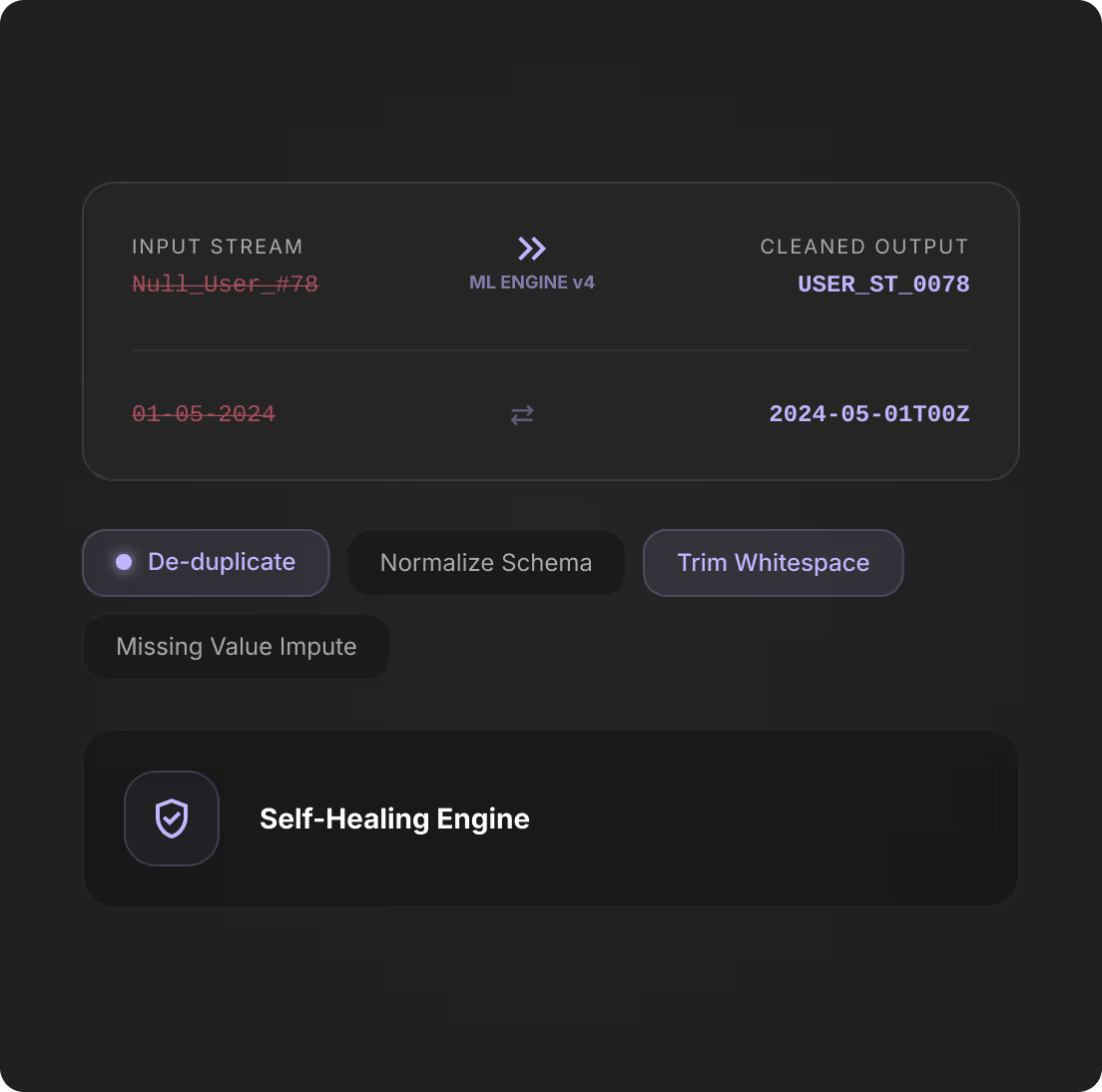
Available transformations include: case conversion, punctuation removal, non-printable character stripping, abbreviation expansion and contraction (CA to California, Mfg. to Manufacturing), field parsing (split a full address into street, city, state, ZIP; split a full name into first, middle, last), field merging, find-and-replace with regex support, number cleansing for phone and ID fields, and cross-column operations. The platform ships with over 300,000 built-in standardization rules for name, address, and phone data.

Cleansing happens in memory. Your source data is never modified. Every transformation is saved in a reusable project configuration, so you can re-run the exact same cleansing pipeline next month when new data arrives.

Match

Configure which fields to compare, select from multiple matching algorithms (exact, phonetic, fuzzy, edit distance, token-based, ML-enhanced), assign weights to each field, and set confidence thresholds. MatchLogic supports cross-column matching for situations where data entry errors put values in the wrong field.

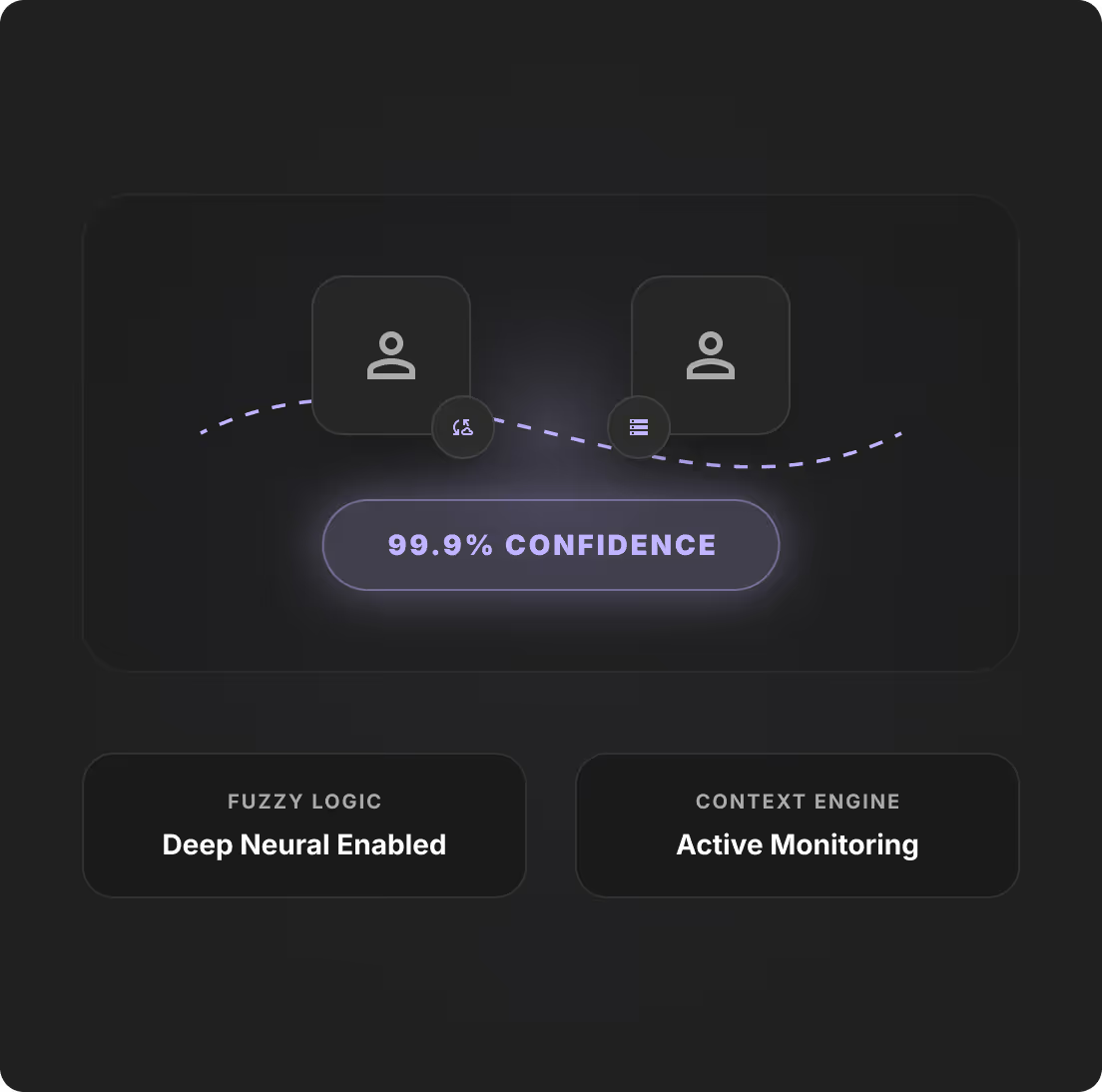
The matching engine processes millions of records in-memory at speeds rated faster than IBM and SAS in independent benchmark studies. Proprietary algorithms refined over 19 years catch the variations that cause the most missed matches: nickname-to-formal name conversions (Bill to William), phonetic similarities (Stephen to Steven, Kathy to Cathy), abbreviation differences (J&J to Johnson & Johnson), transposed characters, and format inconsistencies across systems.
In head-to-head comparisons across 15 independent studies with datasets ranging from 80,000 to 8 million records, MatchLogic consistently found at least 10% more true matches than competing commercial solutions, with the fewest false positives.

Merge and Build the Golden Record

Once matches are identified, you review them at each confidence level and decide which to accept. Then you design survivorship rules: when two records for the same entity have conflicting values, which value wins? MatchLogic lets you define this logic by field, by source priority, by completeness, or by recency.

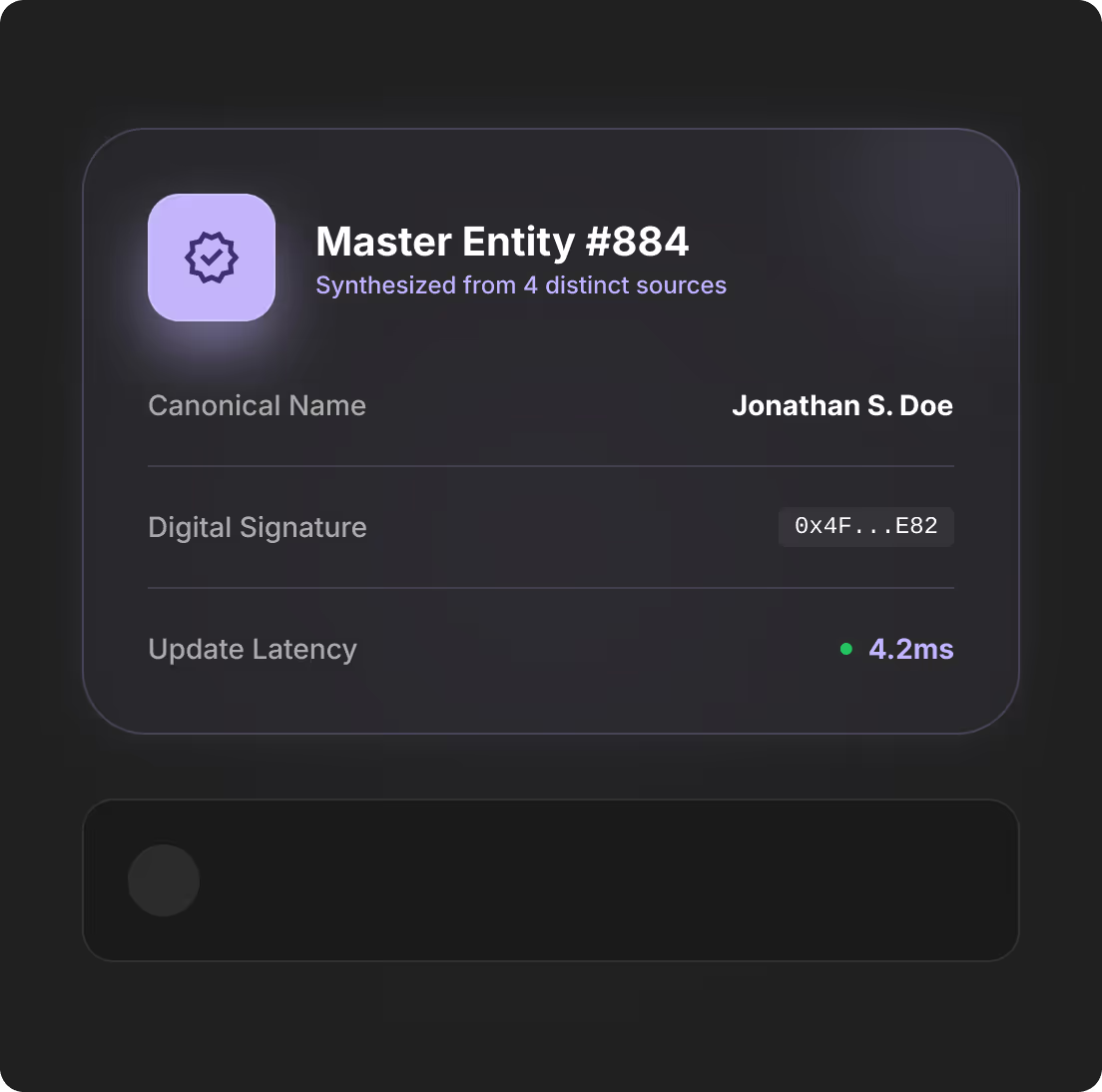
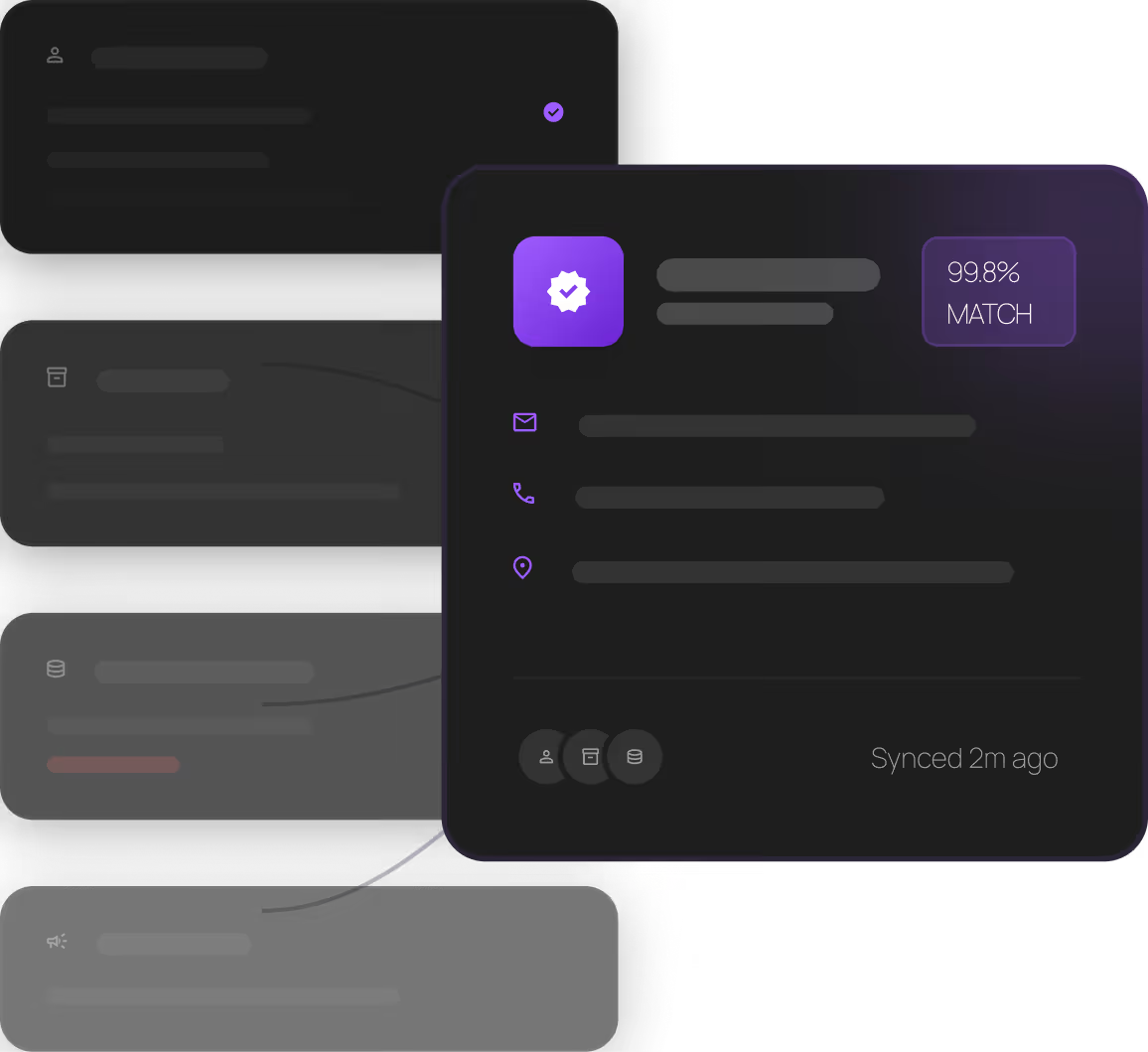
For example: always take the email address from Salesforce because it is most current, but take the mailing address from the billing system because it is verified. Take whichever phone number was updated most recently. Take the most complete company name across all sources. These survivorship rules execute automatically across every matched group to produce a single golden record per entity: the most accurate, most complete version of that customer, vendor, or product record that your organization has.
The golden record is not a guess. It is assembled from the best attributes across every source, governed by rules your team defines and controls.

Export

Export the profiled, cleaned, matched, and merged data back to any destination: flat files, databases, CRMs, or downstream systems. Export at any stage of the pipeline. Send the profiling results to your data governance team. Send the cleaned data to your analytics platform. Send the golden records to your CRM or ERP. You choose the format and the destination.

Automate

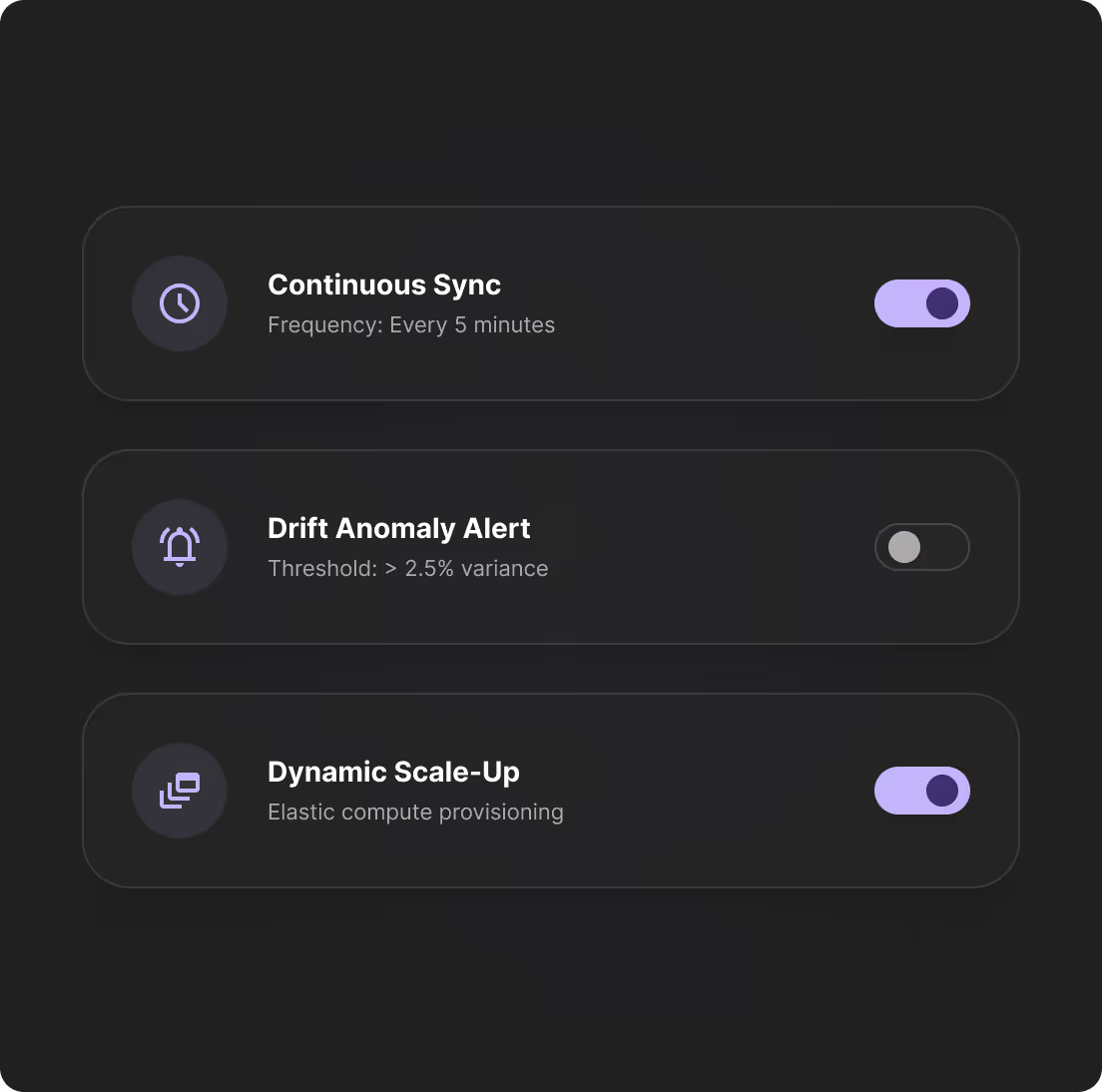
Once you have configured a project (import sources, profiling rules, cleansing pipeline, match configuration, survivorship logic, and export destination), you can automate the entire workflow with MatchLogic's built-in Workflow Scheduler. Set a project to run on a fixed schedule (daily, weekly, monthly), trigger it at a specific date and time, or configure it to execute automatically whenever a connected data source updates.

This turns a one-time cleanup into a continuous data quality process. New records enter your CRM every day. New vendors get added to your ERP every week. The Scheduler ensures that every new record is profiled, cleaned, matched, and merged into your golden record without anyone clicking a button. A calendar view gives your team a summary of all upcoming and completed automation runs across every project.
Data quality degrades the moment you stop paying attention to it. The Scheduler makes sure you never stop.

Know your data before you try to fix it.

Most data quality problems start because someone built matching rules on assumptions instead of evidence. MatchLogic's profiler eliminates guesswork by showing you exactly what every column contains, how complete it is, and whether it is reliable enough to use for matching.

Completeness and Null Analysis

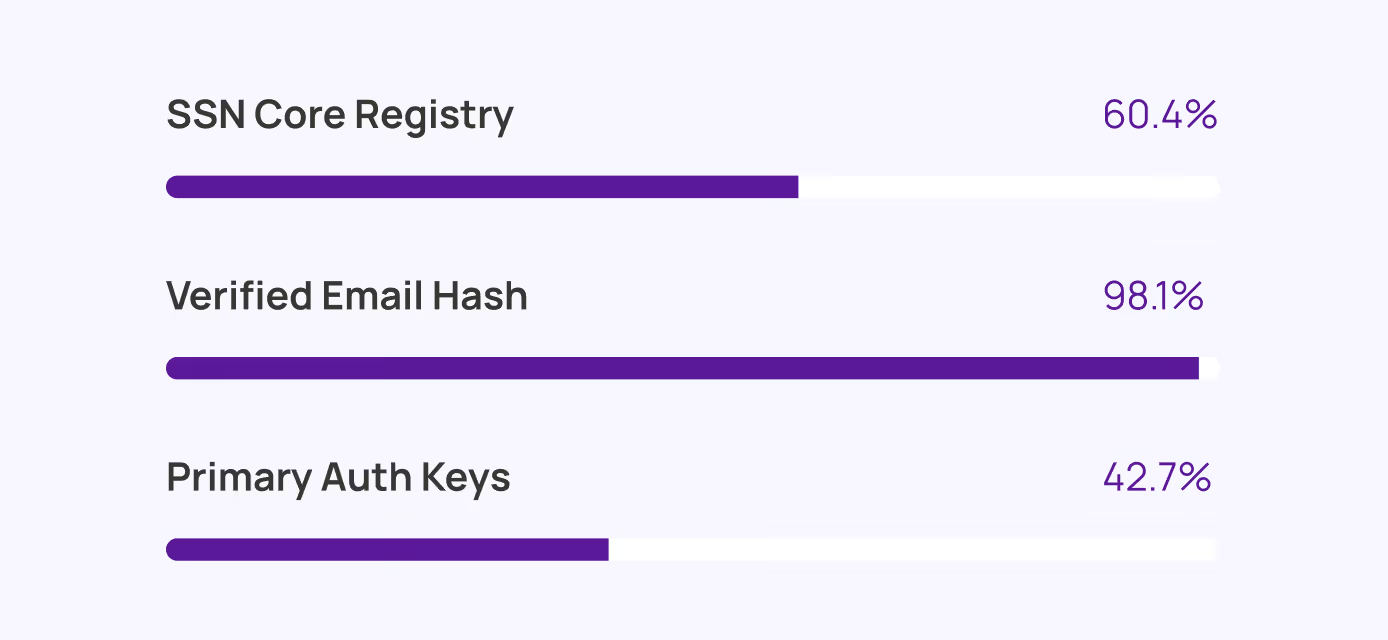
See the fill rate for every column instantly. If SSN is only 60% populated, you know not to build a required match rule on it. If email is 98% populated, you know it is a strong candidate for primary matching.

Semantic Classification

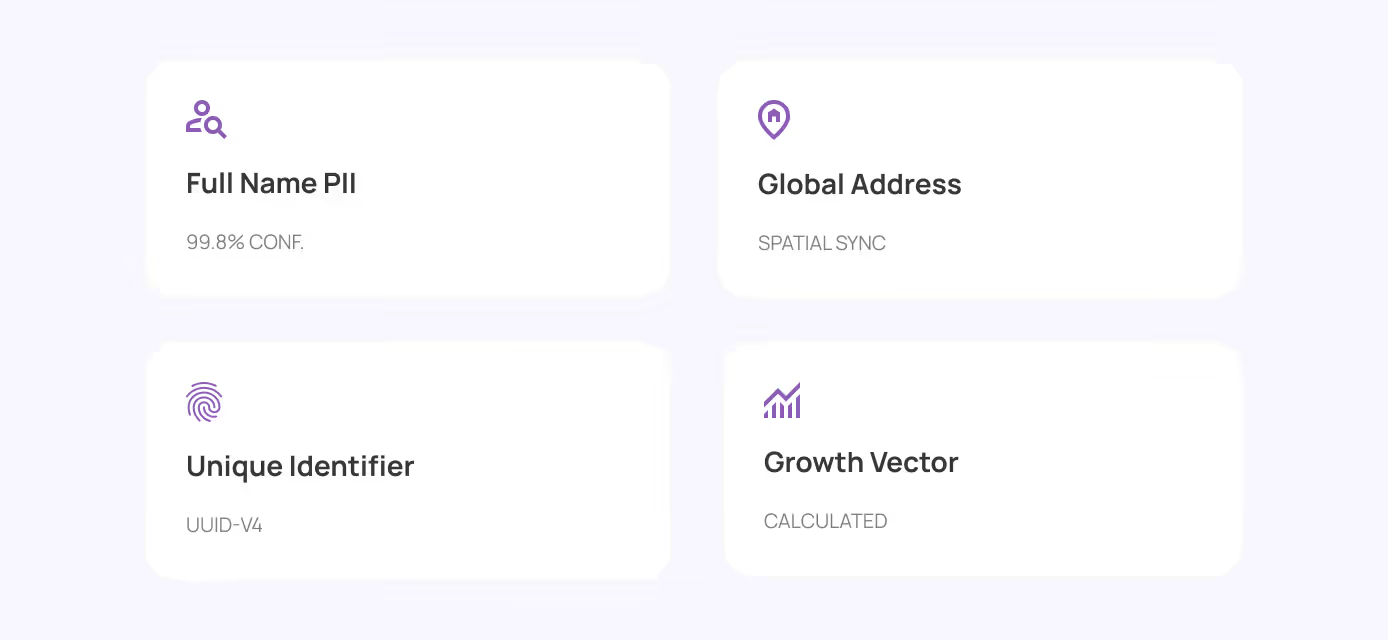
MatchLogic automatically classifies what each column contains: full name, address, identifier, currency, measurement, date, timestamp, duration. This saves time during match configuration because you immediately know which columns are comparable across sources.

Entropy and Anomaly Detection

Entropy scores reveal how much variation a column contains. Low entropy on a name field suggests most values are the same (a data problem). Anomaly detection flags outliers and extreme values that could cause false matches or indicate data entry errors.

Completeness and Null Analysis

The Wordsmith tool shows the most repeated words in any column with their exact counts. Run it on a Company Name column and instantly see every variation of 'LLC', 'Inc', 'Corp', 'Company', 'Holdings' across your dataset. This is how you build targeted standardization rules in minutes instead of days.

Frequently Asked Questions

What does data profiling reveal about my datasets?

Profiling instantly shows exact duplicate counts, missing data percentages, format variations, and quality scores for every field. You'll see where "McDonald's" has 20 different spellings, which systems create the most duplicates, and which fields are 40% empty. Visual heat maps highlight problem zones across all your systems simultaneously.

How fast can matchlogic profile large datasets?

matchlogic profiles 10 million records in under 8 minutes, maintaining the same speed whether scanning thousands or billions of records. The engine analyzes every field, identifies patterns, calculates quality scores, and generates visual reports without performance degradation.

What quality issues does profiling typically uncover?

Most companies discover 25-35% duplicate records they never knew existed. The average first-time profile uncovers thousands of hidden duplicates costing real money. Profiling reveals duplicates hiding behind misspellings, abbreviations, and format differences your team would never catch manually.

Does profiling happen before data matching begins?

Yes - profiling gives you potential duplicate percentages and risk scores before you write any matching rules. You'll know exactly how many likely duplicates exist, where they cluster, and which fields have the variations causing problems. This helps you configure match rules based on your actual data patterns, not guesswork.

Can I schedule automatic profiling runs?

Yes - schedule profiling hourly, daily, weekly, or triggered by data loads via API. Embed profiling directly in your data pipelines to catch quality issues before they hit production. Set threshold alerts for when duplicate rates exceed limits or quality scores drop. Automated profiling keeps constant watch without manual intervention.

Can profiling detect compliance risks?

Profiling automatically flags PII in wrong fields, incomplete required data, and audit risks. It identifies records missing mandatory fields, catches format violations, and documents quality scores for compliance reporting. Every profile run creates audit trails showing your data quality status and improvement trends - turning audit panic into audit proof.

The Future of Data Quality. Delivered Today.

Thank you! Your submission has been received!
Oops! Something went wrong while submitting the form.
By subscribing you give consent to receive matchlogic newsletter.