
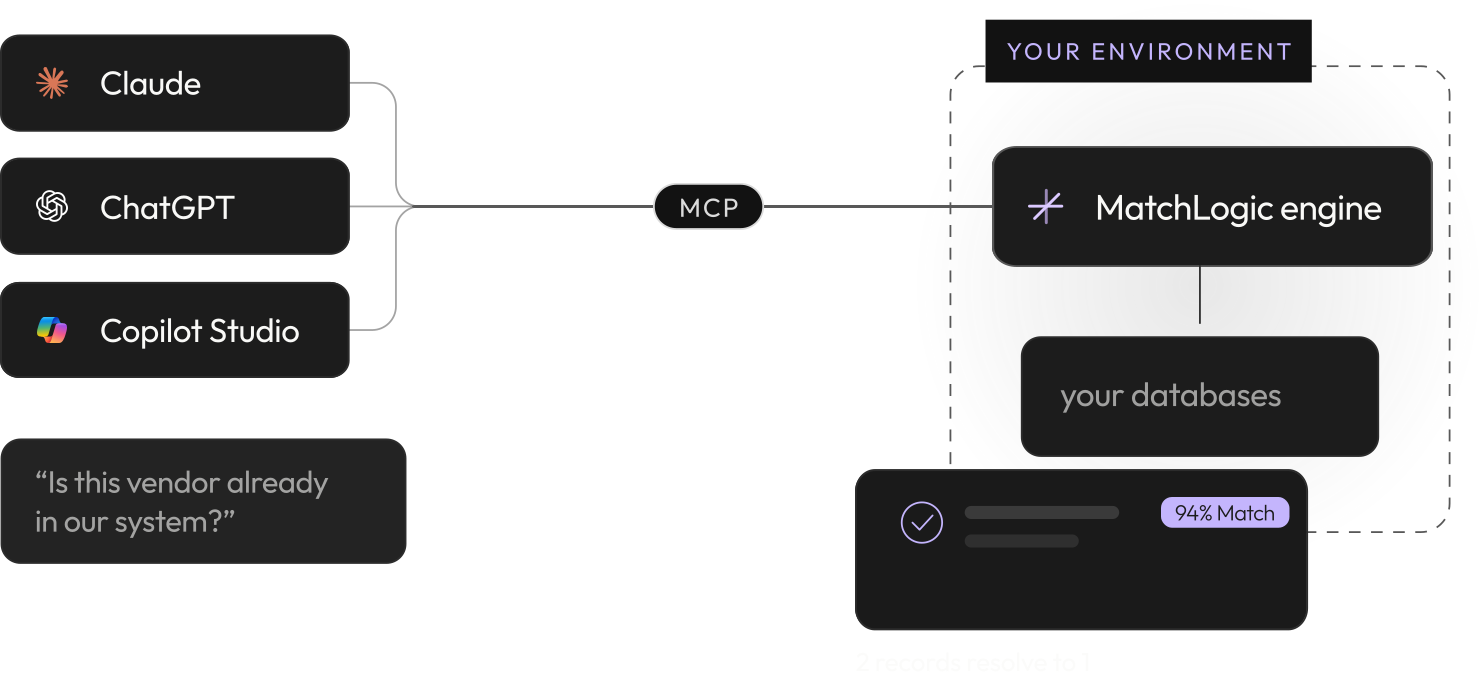
The MatchLogic MCP Server lets AI agents match, deduplicate, and resolve entity records through the Model Context Protocol, with all matching running inside your own environment. Any MCP-compatible agent, including Claude, ChatGPT, and Microsoft Copilot Studio, can call MatchLogic's matching engine as a tool: checking whether two records are the same supplier, deduplicating a contact list before a campaign, or resolving an account against master data before acting on it.








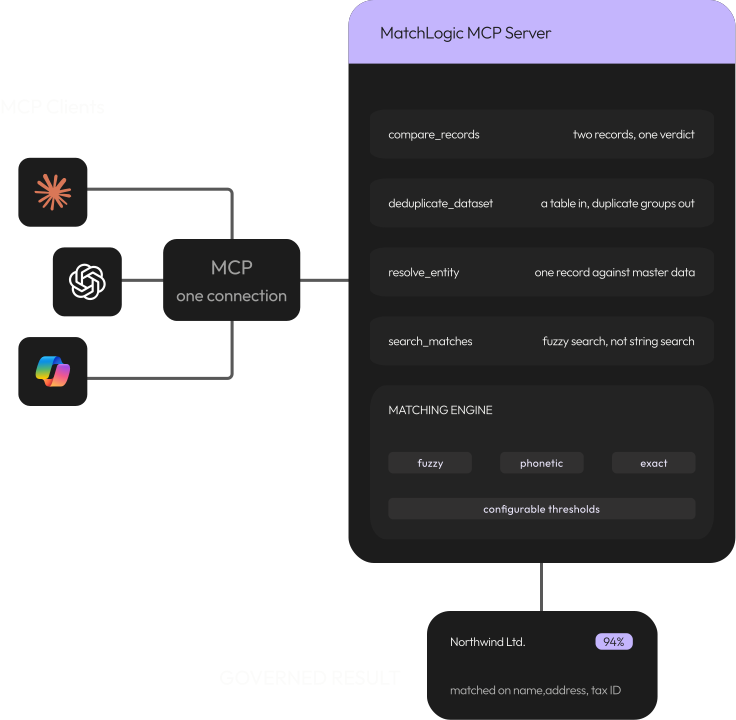
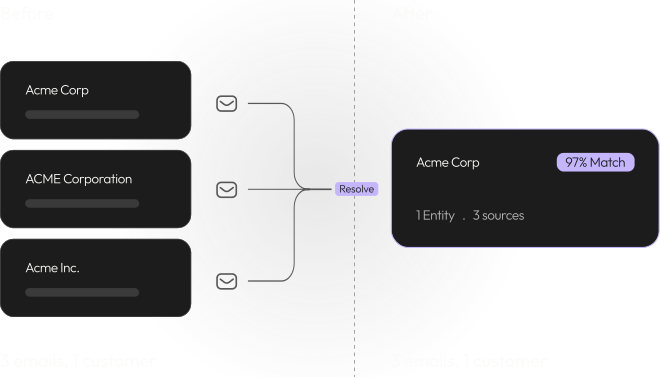
The MCP server exposes MatchLogic’s core matching capabilities as callable tools. In practice, connected agents can:
It runs on the same on-premise infrastructure as your existing MatchLogic installation. There is no separate cloud service to stand up.
Add the MatchLogic MCP Server as a connector in Claude, ChatGPT, Copilot Studio, or any custom MCP client, with the credentials and permissions you choose.

Connected agents see the available matching tools automatically and call them as part of their workflows, passing records or dataset references.

The same fuzzy and exact matching engine you already trust processes the request locally and returns decisions, confidence scores, and explanations, all captured in the audit log.
Every demo starts with your data. Bring a sample file and we will walk through profiling, cleansing, AI resolution, and golden record assembly live. You will see how the engine handles your specific identity challenges, with no slide decks and no hypothetical scenarios.
Schedule a DemoAI entity resolution links records that point to the same real-world person or company, even when names, formats, and identifiers differ, using a pre-trained engine rather than hand-written rules. MatchSense groups records into entities automatically and gets sharper as it processes more data.
Traditional matching depends on rules and thresholds someone sets and maintains by hand. AI entity resolution runs on a pre-trained engine that groups records on its own, learns from new data, and corrects earlier work over time. MatchSense is accurate from the first run, with no rule-building phase.
No. The engine does one job, entity resolution. It runs no language model and generates no text, so it cannot hallucinate, and identical inputs always produce identical, explainable results.
No. The engine comes pre-trained on global name, nickname, and address libraries and is accurate on the first run. There is no labeled dataset to build and no training phase to sit through.
It stays on your infrastructure. The engine runs and learns locally, and nothing is sent to an outside service, which keeps MatchSense suitable for HIPAA, GDPR, and government data.
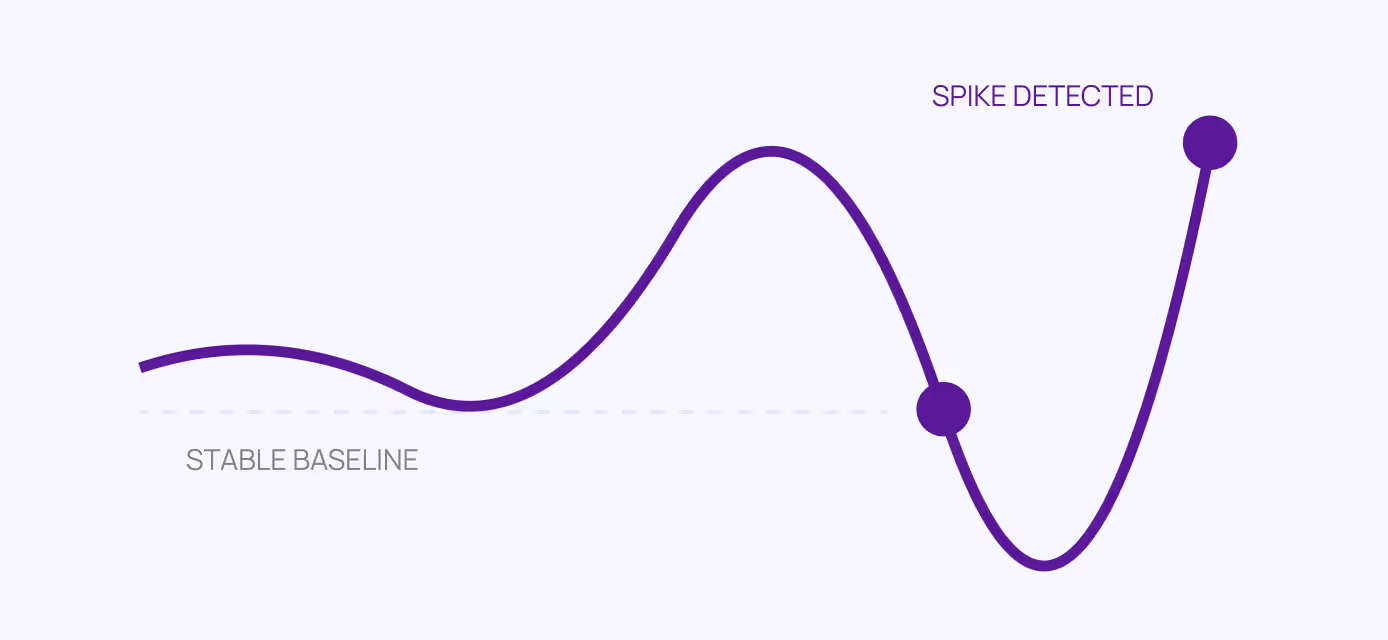
Yes. The engine resolves the relationships between entities and watches feature statistics, so it surfaces linked entities and flags anomalies, such as one identifier shared by many records, a frequent sign of fabricated data.

.svg)


