Profile your data. Resolve every identity. Build your golden record.

MatchSense brings AI entity resolution to your data. It profiles and cleanses your data, then resolves scattered records into real-world entities with a pre-trained AI engine that is accurate from the first run. No labeled data and no accuracy drift. Your records never leave your environment.
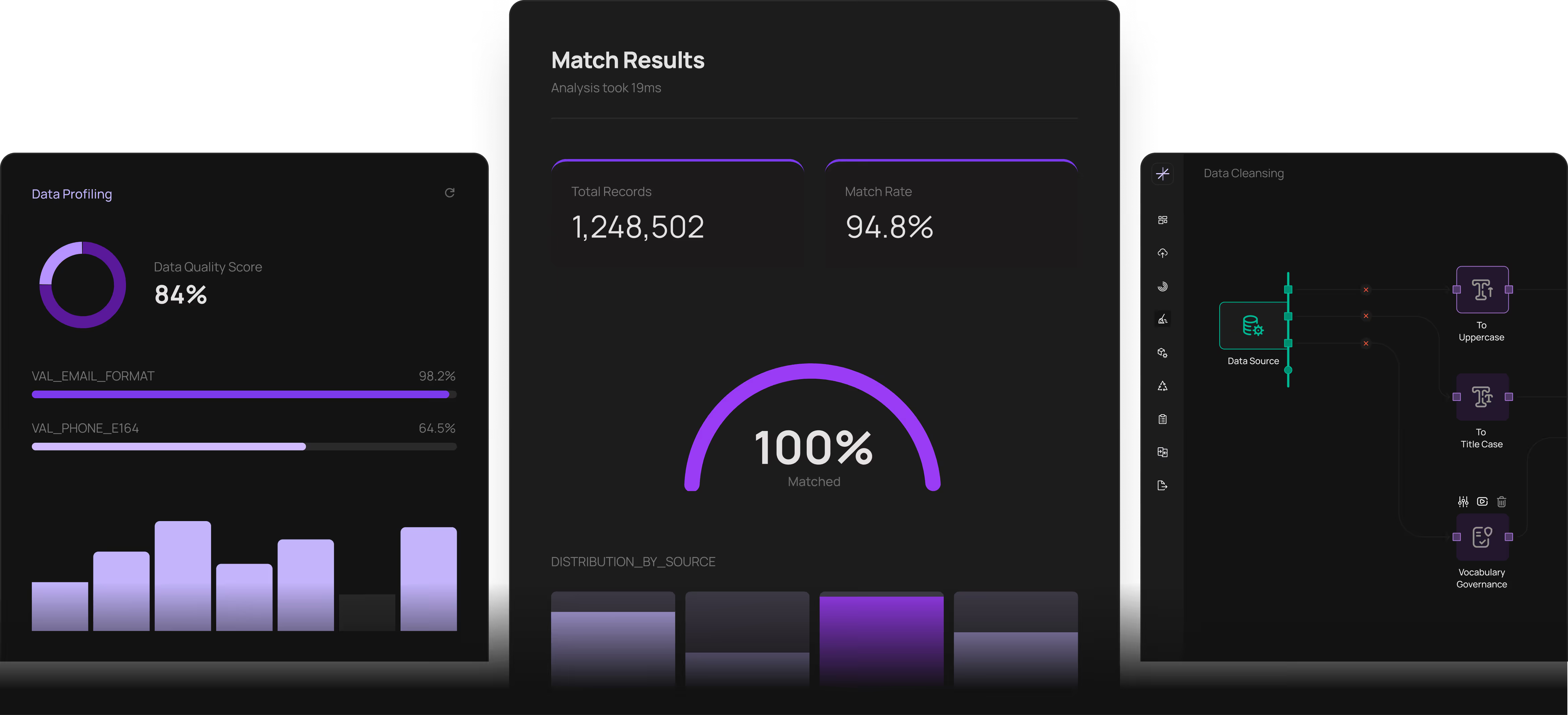

From raw records to a golden record, in one pipeline

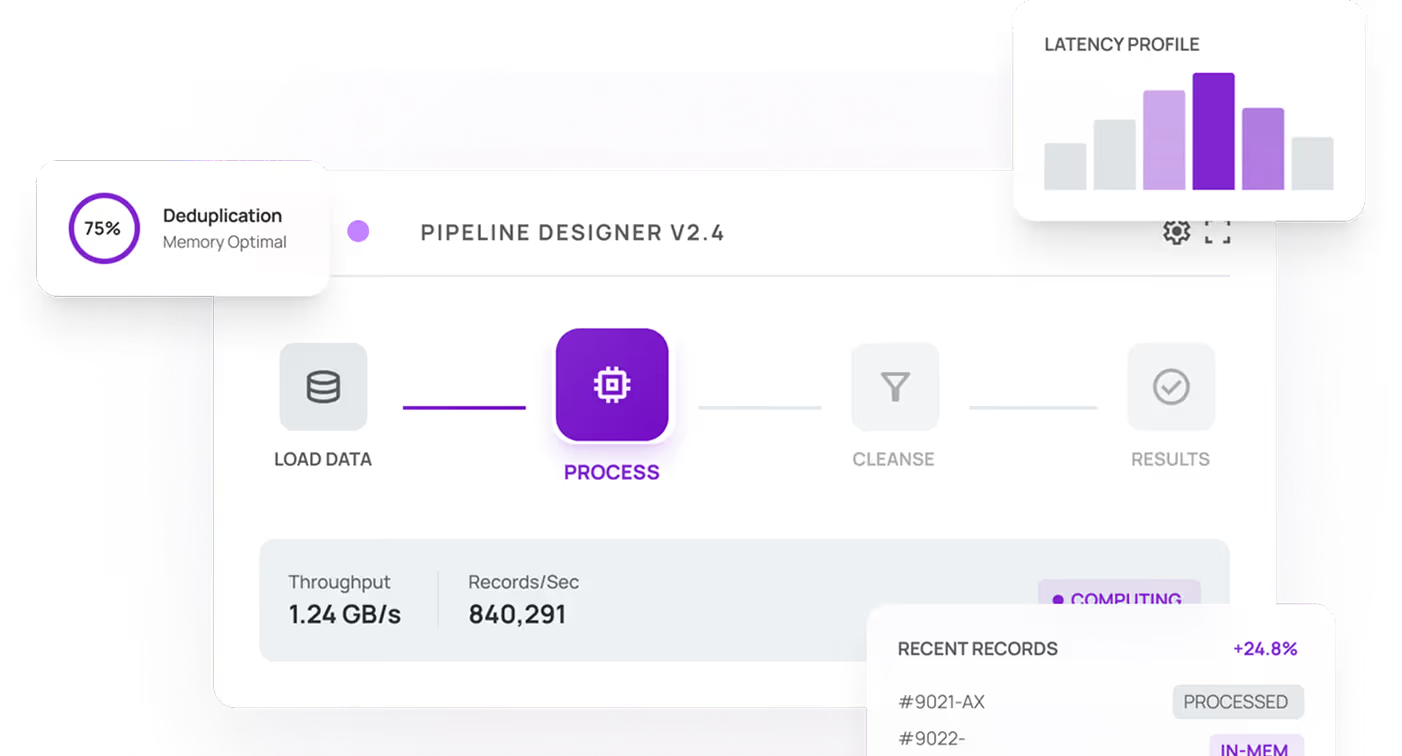
MatchSense moves your data through a connected, visual pipeline. Work through it once, adjust any step as you go, then hand the finished workflow to the scheduler to repeat on its own.

Import

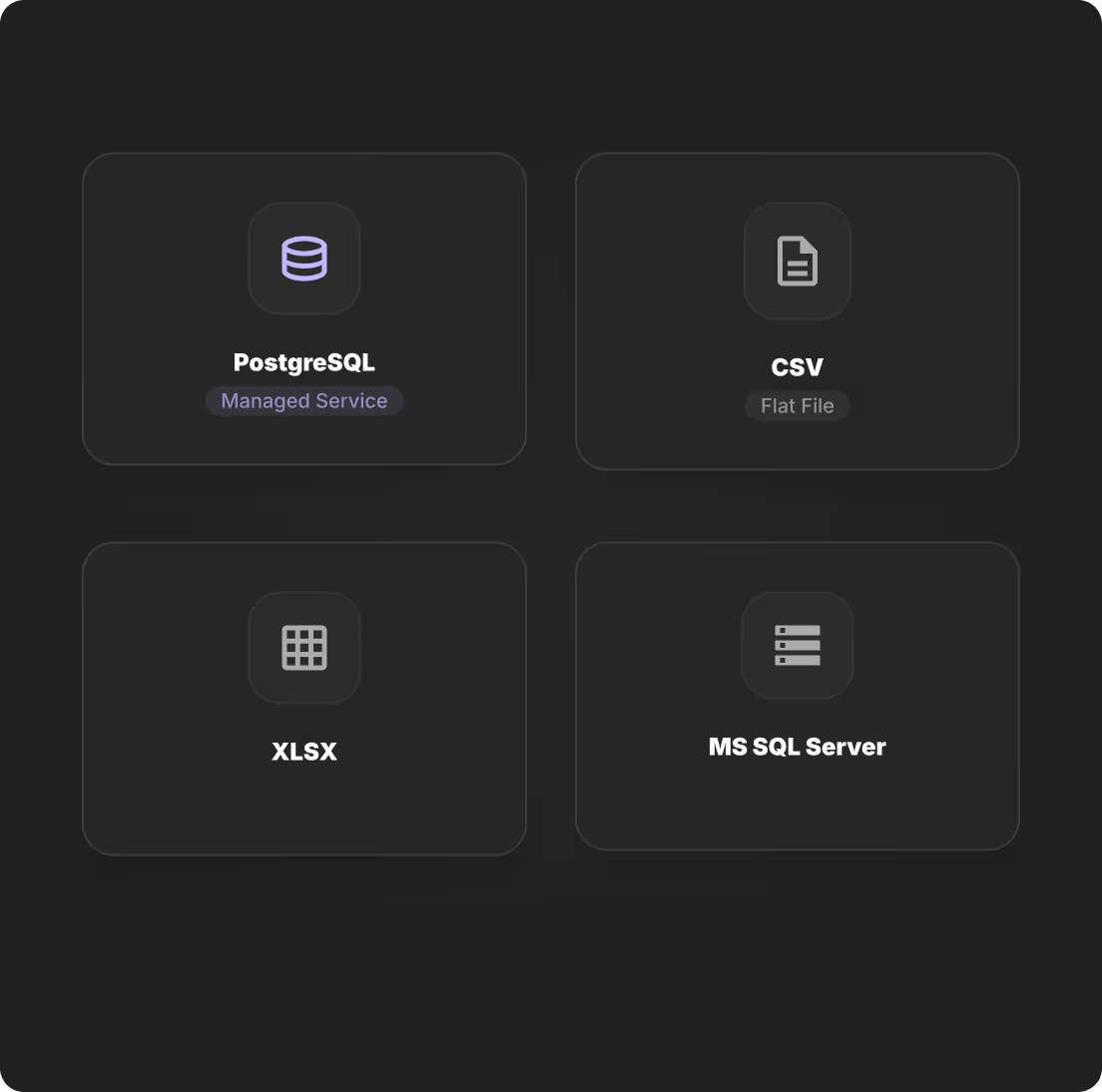
Every project begins here. MatchSense connects to databases such as SQL Server, Oracle, Teradata, and MySQL, to Salesforce and other cloud applications, and to CSV, Excel, and JSON files, through native connectors or ODBC. Mismatched schemas are reconciled for you, so several sources land in one project ready to work with.

Profile

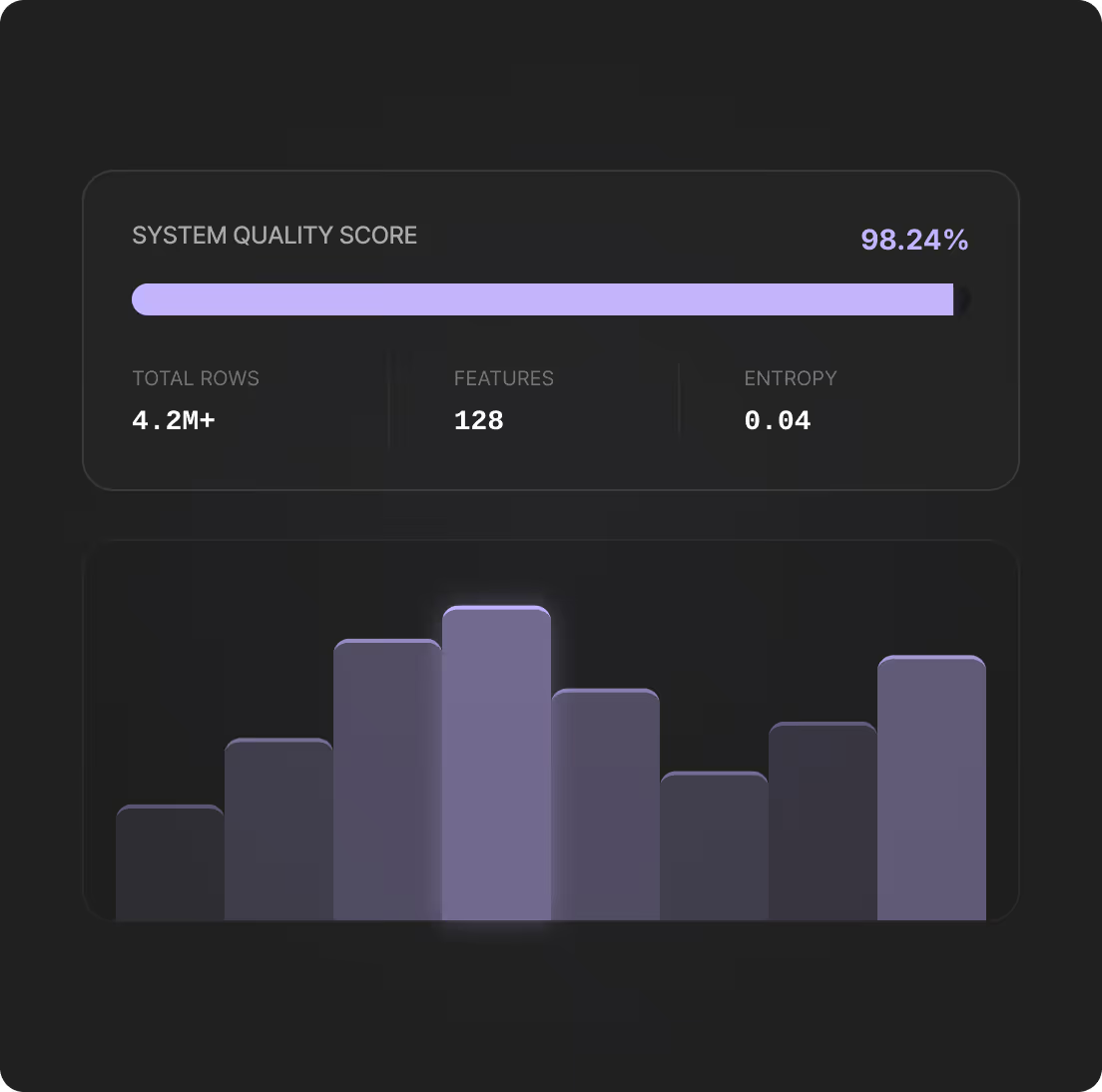
Once your sources are loaded, MatchSense reads them back to you before anything changes. It analyzes every column for type, length spread, fill and null rates, and distinct values. It also checks character composition, entropy, anomalies, and semantic role.

The Vocabulary Governance view ranks how often each value appears. Seeing “LLC”, “L.L.C.”, and “Limited Liability Company” side by side, with their counts, tells you precisely what to standardize before resolution begins.
Profiling also separates the dependable fields from the weak ones. A column that is half empty is a poor input, and the profiler surfaces that early, so the engine never resolves on shaky evidence.

Cleanse and Standardize

Profiling shows you what to fix; this step is where you fix it. Cleanup happens in a visual editor where you chain transformations into a flow and watch each one reshape the data live, with no code and no SQL to write.

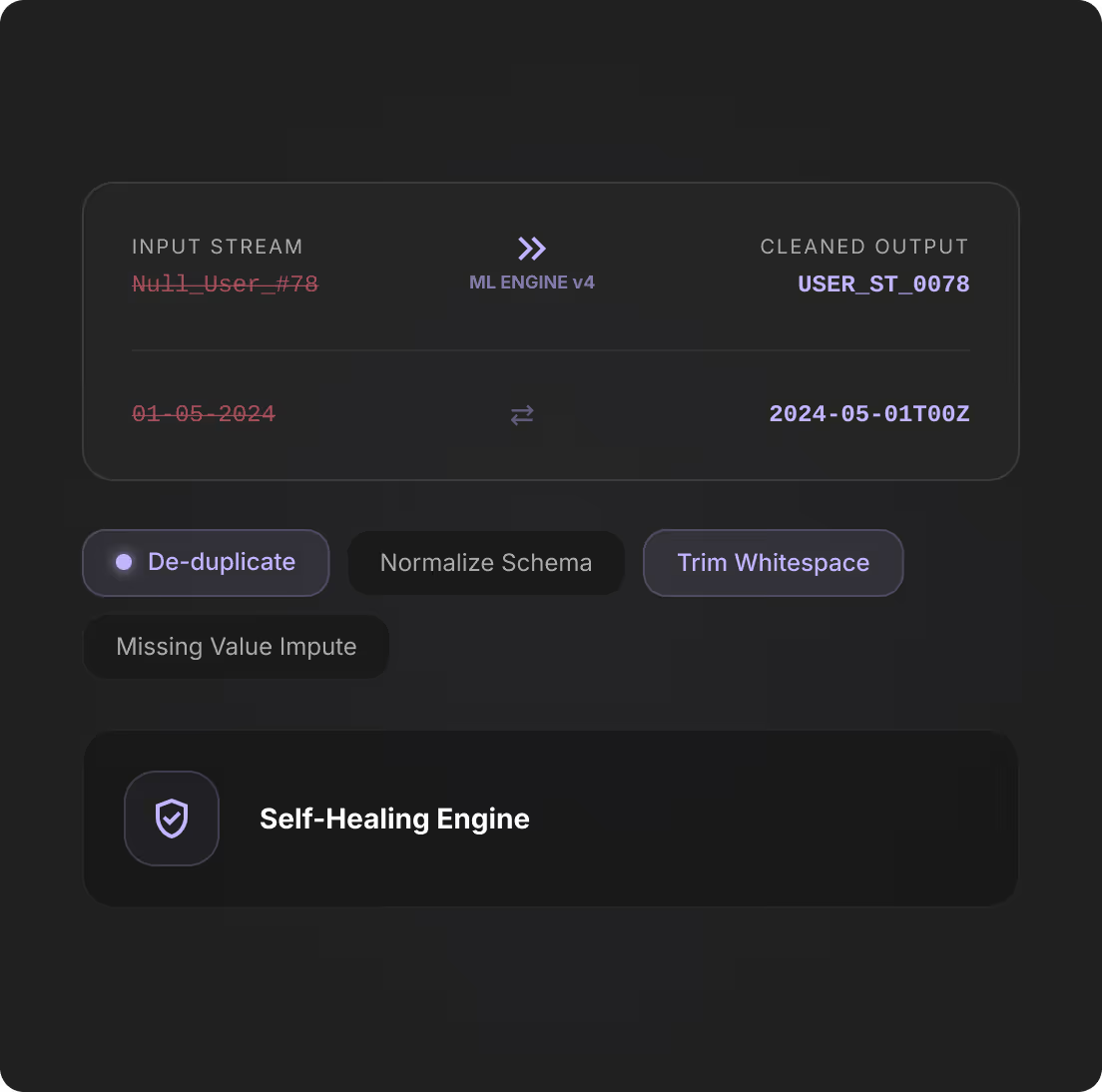
Convert case, strip punctuation and hidden characters, expand or contract abbreviations, parse and merge fields, run regex find-and-replace, normalize phone and ID values, and operate across columns. A library of over 300,000 standardization rules for names, addresses, and phone data ships with the platform.

Your source data stays untouched, since every change runs in memory. The full sequence saves as a reusable configuration, ready to apply the next time fresh data lands.

Resolve

With clean, well-understood data in place, the AI entity resolution engine takes over. You hand it your prepared records and it groups them into real-world entities on its own, with no weights to assign and no thresholds to tune.T

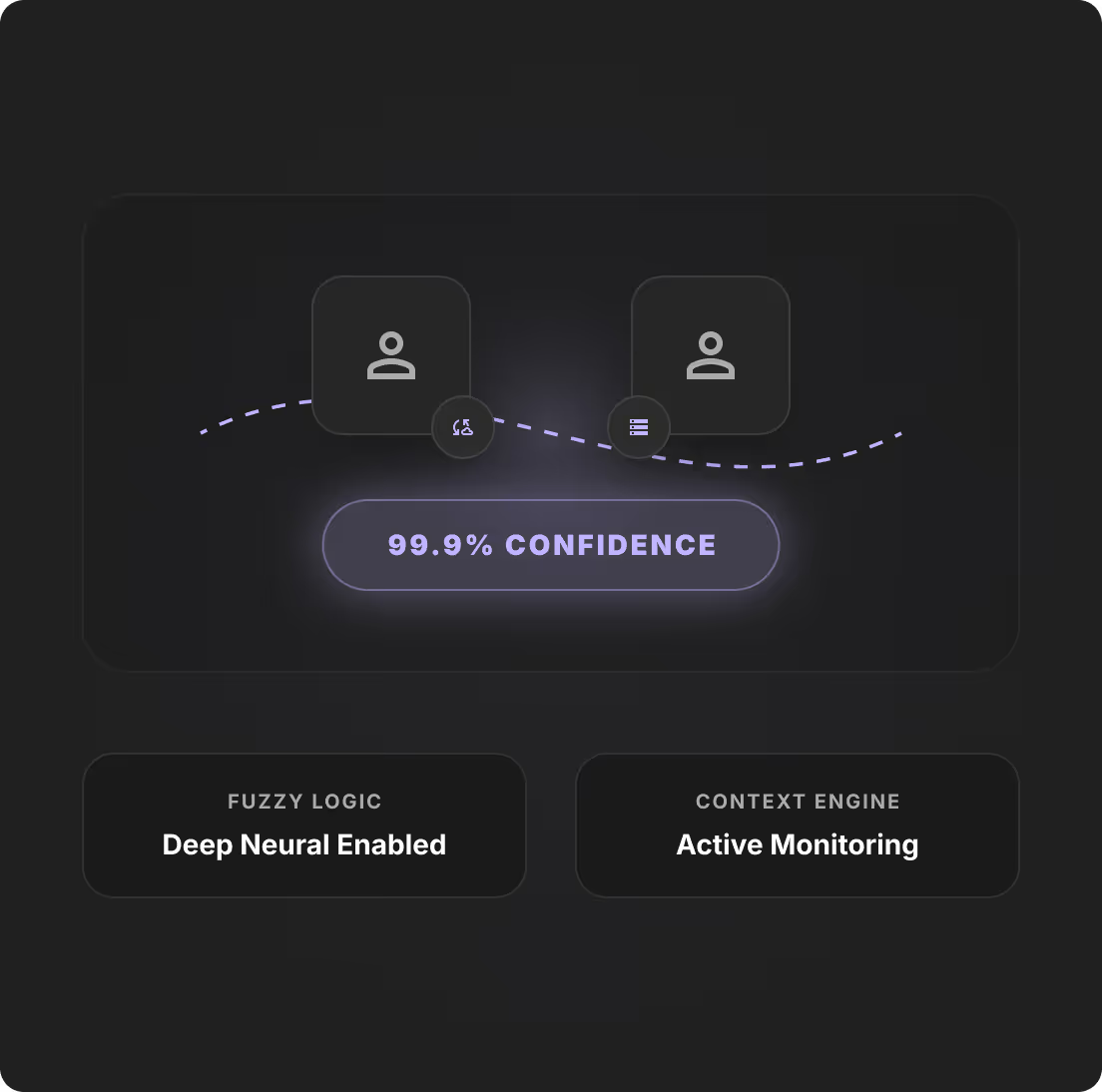
he engine ships pre-trained on global libraries of names, nicknames, and addresses, so the first run is accurate. It keeps learning as it goes, noting every new spelling and format, and revisiting earlier groupings when a later record adds something. The order in which records arrive never changes the outcome, so results stay stable instead of drifting.

MatchSense also reads how entities connect. Shared addresses, shared identifiers, and other links surface alongside the matches, and statistical checks flag suspect values, such as one identifier stretched across hundreds of records. Purpose-built comparators handle names, addresses, phones, dates, and IDs across languages and formats.
In head-to-head comparisons across 15 independent studies with datasets ranging from 80,000 to 8 million records, MatchSense consistently found at least 10% more true matches than competing commercial solutions, with the fewest false positives.

Merge and Build the Golden Record

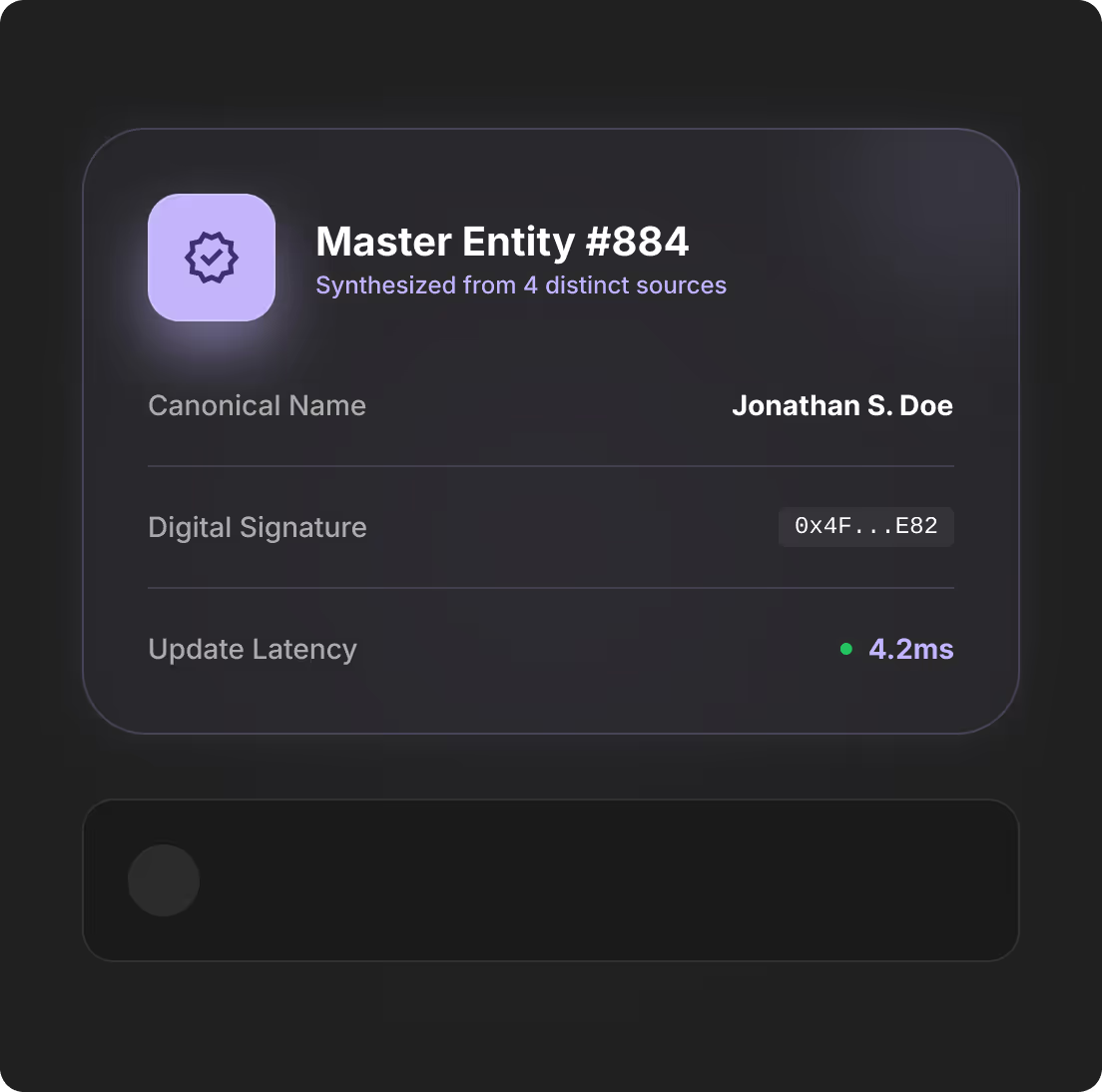
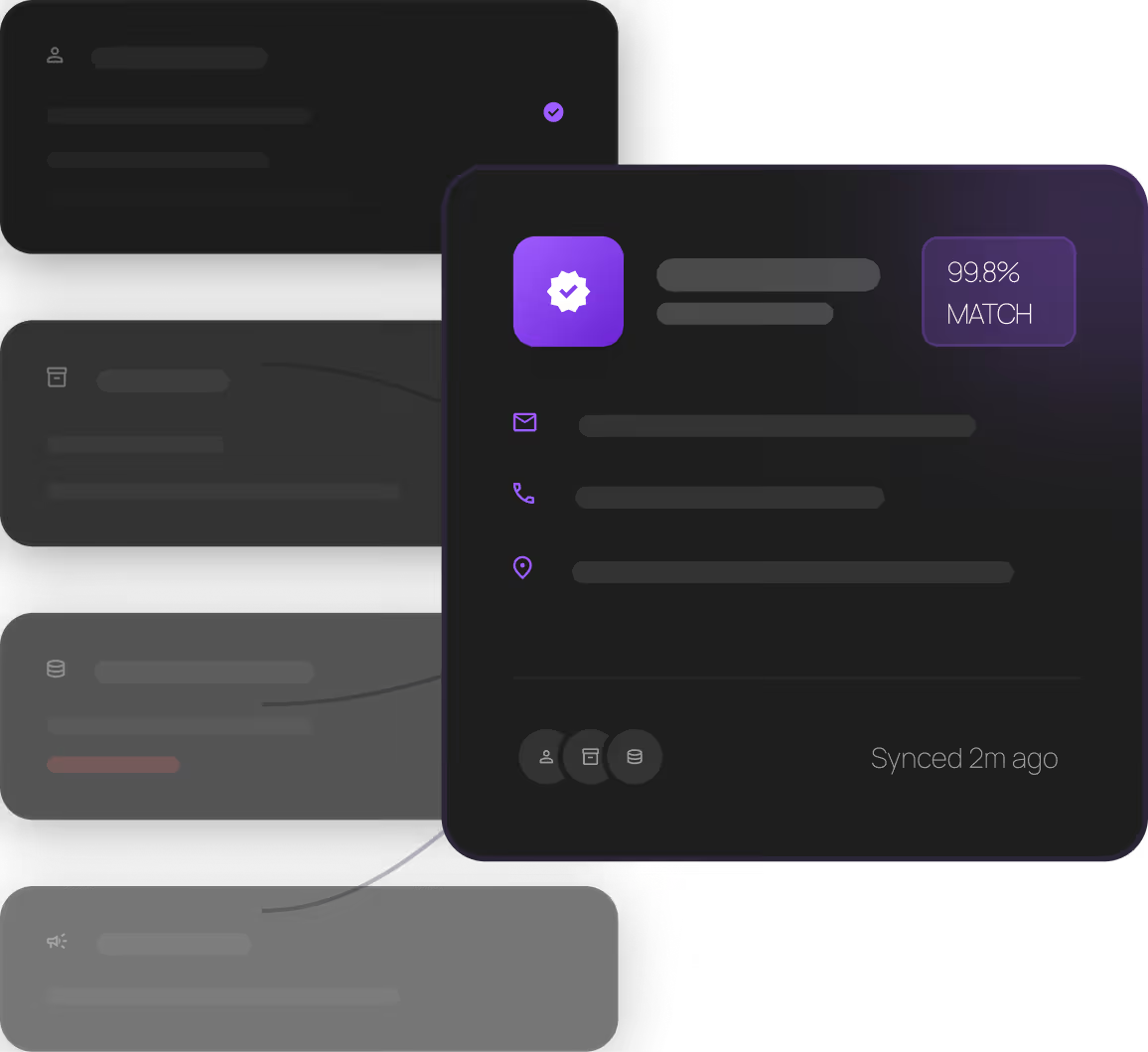
Once the engine has grouped your records into entities, MatchSense assembles one record for each. You set survivorship rules that pick the winning value when sources disagree, deciding by field, by source ranking, by completeness, or by how recent the value is.

Trust the contact email from your marketing platform, since it is corrected most often, but keep the mailing address from your finance system, since that one is verified. Those rules run automatically across every entity and produce the golden record: the cleanest, fullest version of each customer, supplier, or person.

The engine decides what belongs together; survivorship decides what the record says. Both follow logic your team owns and can change at any time.
The golden record is not a guess. It is assembled from the best attributes across every source, governed by rules your team defines and controls.

Export

With golden records built, the last decision is where they go. Send the results to files, databases, CRMs, or downstream applications, and export from any stage of the pipeline, not only the end. Resolved entities or finished golden records move into your CRM, ERP, warehouse, or analytics stack in the format you choose.

Automate

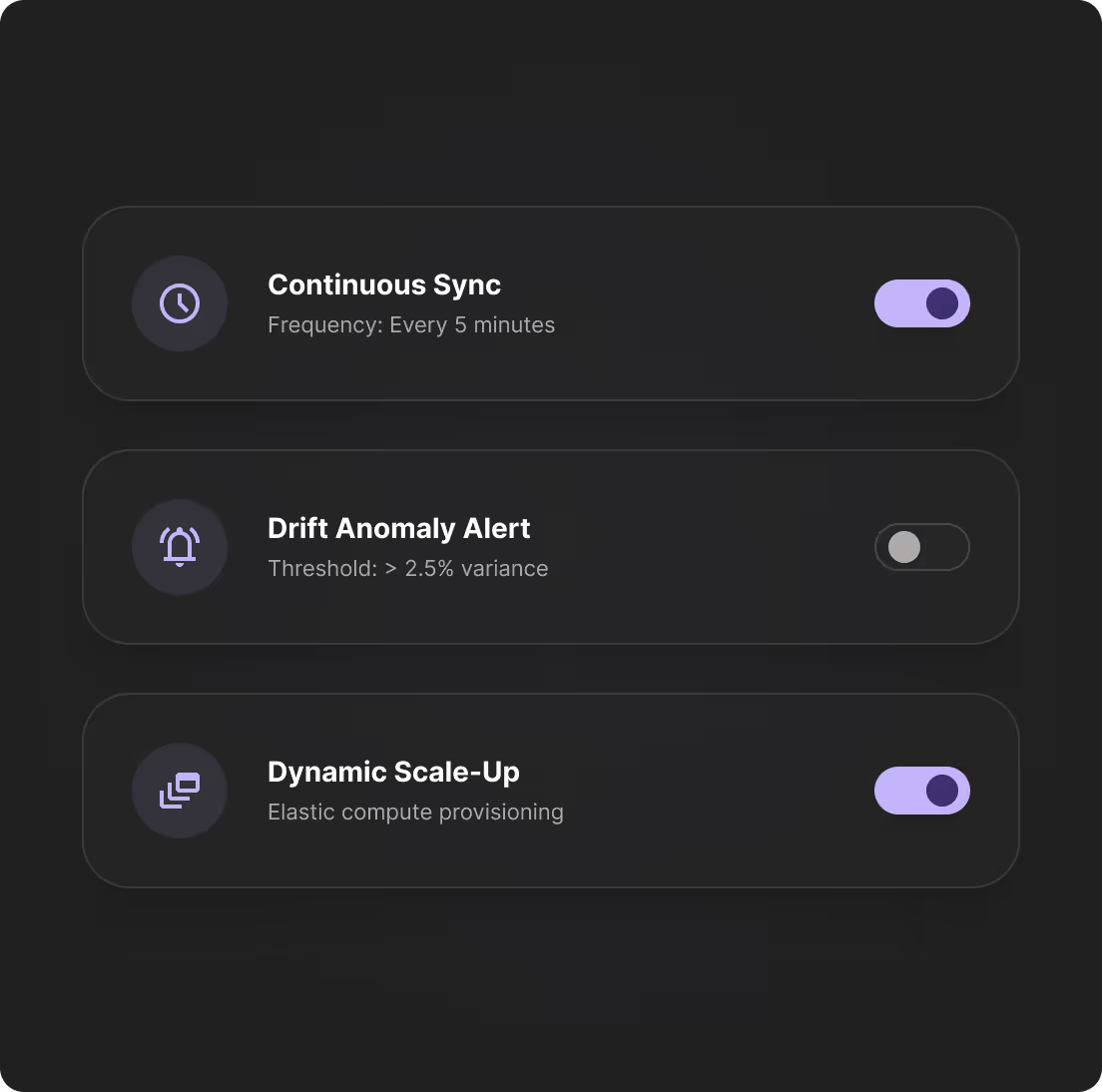
Once the pipeline runs end to end the way you want, MatchSense keeps it running for you. Our Orchestrator repeats the full sequence on a fixed schedule, at a set time, or the moment a connected data source updates.

Because the engine keeps learning, no two runs are identical. Each one resolves new records against everything already learned, and a calendar view keeps every scheduled and completed run in one place.
Data quality degrades the moment you stop paying attention to it. The Orchestrator makes sure you never stop.

Resolve from evidence, not assumptions

Most resolution errors trace back to bad inputs. Before the AI resolves anything, the MatchSense profiler shows you exactly what every column contains, how complete it is, and whether it is reliable enough to feed into resolution.

Completeness and Null Analysis

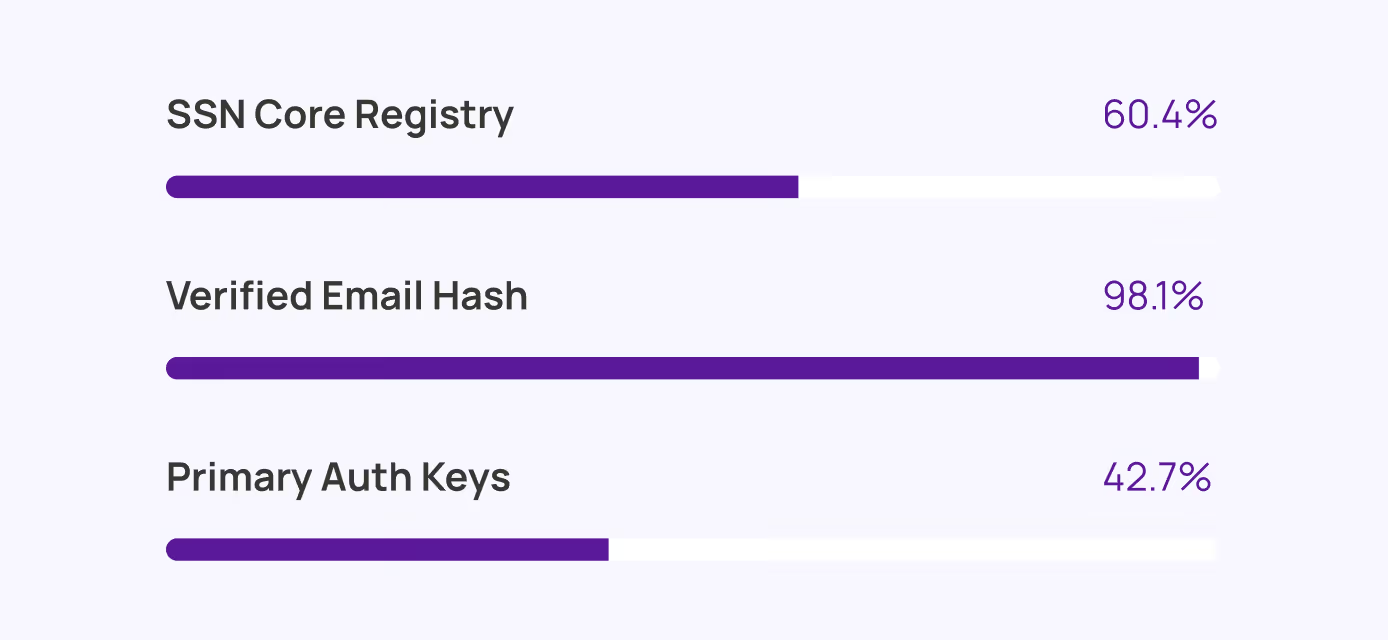
Every column shows its fill rate at a glance. A 95% populated email is worth resolving on; an identifier filled half the time is not, and you know which is which before you start.

Semantic Classification

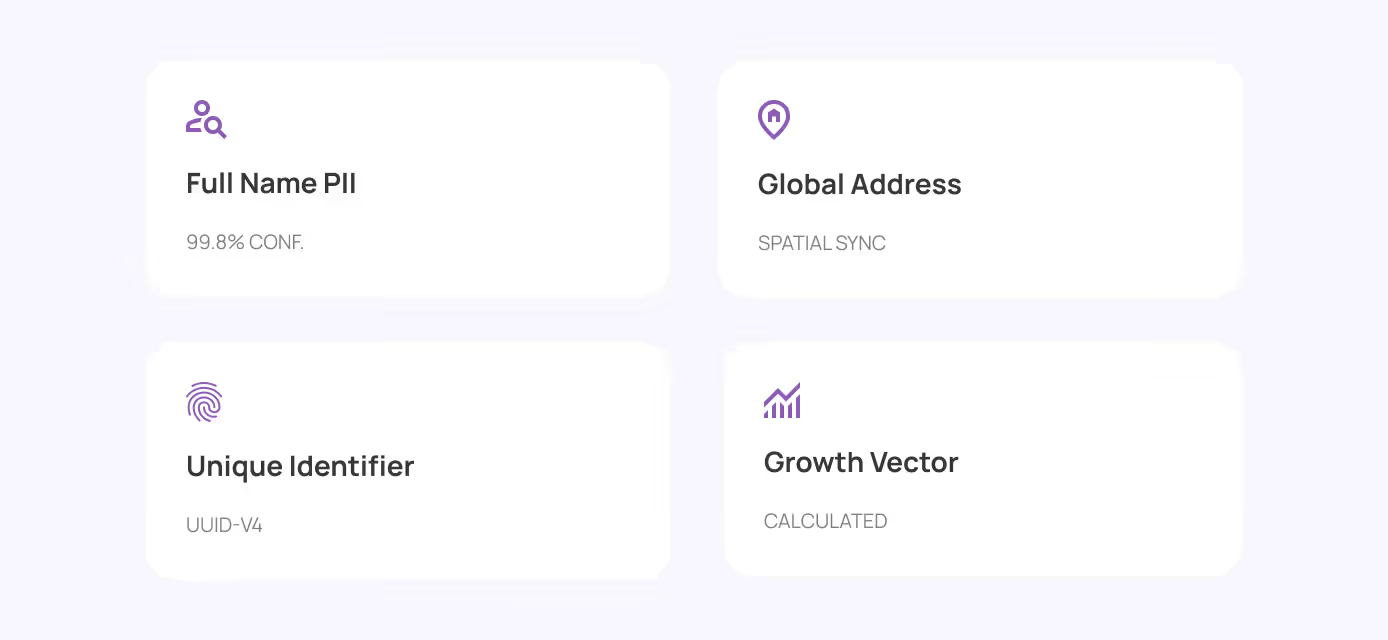
The profiler labels each column by what it actually is: a name, an address, an identifier, a date, a currency value, and so on. You can see immediately which columns line up across sources.

Entropy and Anomaly Detection

Entropy measures how varied a column is. Unusually low variation on a name field points to a data problem, while anomaly checks catch the outliers that would otherwise distort results.

Word Frequency Analysis through Vocabulary Governance

Vocabulary Governance counts how often each value occurs. Point it at a company-name column and every form of “Inc”, “Corp”, “Holdings”, and “Company” appears with its frequency, turning a days-long cleanup into a short one.

Rated faster and more accurate than IBM and SAS.

Speed and accuracy are not marketing claims. They are the results of independent benchmark studies conducted across 15 product comparisons with university, government, and private-sector datasets ranging from 80,000 to 8 million records.

96%

Average match accuracy across datasets

10%+

More true matches found vs. competing commercial tools

Fewest

False positives across all independent benchmark studies

In-memory processing at enterprise scale

MatchSense processes millions of records in memory. You load your data, run the pipeline, review the results, adjust, and re-run without writing to disk between steps. This is how a single analyst can deduplicate an 8-million-record vendor master in an afternoon instead of a week.

Proprietary algorithms refined over 19 years

Entity resolution finds the matches. Survivorship builds the golden record.

A golden record is the single best version of an entity, drawn from the strongest fields across every system. MatchSense decides which records describe the same entity; survivorship decides which of their values to keep.

You write the field-level rules: trust this source over that one, prefer the most complete value, favor the most recent, or apply your own logic. The rules then run across every resolved entity without manual work.

The golden record exports to any system that needs it, from your CRM and ERP to your warehouse, analytics tools, or MDM. MatchSense produces it; your stack consumes it.

Deploy the way your organization requires.

The MatchSense AI engine runs and learns inside your environment, so no records are sent to a third party at any point. That makes all three deployment options viable for regulated data.

Desktop

Install locally. Run profiling, cleansing, and matching projects on your machine. No data leaves your laptop. Ideal for individual analysts and project-based work. Full pipeline. Full accuracy. Operational in minutes.

Server

Install on your infrastructure. Team access with multiple user licenses. Schedule recurring pipeline runs with the built-in Workflow Scheduler. Automate matching to trigger when source data updates. Calendar view for managing all scheduled tasks.

API

RESTful API exposes every platform feature: profiling, cleansing, matching, deduplication, and merge operations. Embed directly into your data pipelines and applications. Acts as a real-time data quality firewall between your databases and data entry forms.

One engine for every identity problem you have

The same engine that builds a customer 360 also exposes fraud rings and screens identities against watchlists. It maps how entities connect across your data.

Fraud Detection
Surface fabricated identities and connected fraud rings by resolving entities and the relationships between them.
Read more
KYC and AML Screening
Match customer identities to sanctions and watchlists for onboarding and anti-money-laundering checks, with a clear trail behind each decision.
Read more
Customer 360
Unify every record for a customer across CRM, billing, and support systems into one resolved profile your whole organization can trust.
Read more
Mergers and Acquisitions
Resolve overlapping customers and vendors across merging companies, and quantify true overlap before systems are combined.
Read more
Compliance & Audit
Produce documented, explainable resolution decisions for regulators. Every resolved entity carries the evidence behind it.
Read more
Knowledge Graphs
Supply a knowledge graph with resolved entities and their relationships, so downstream analytics and AI reason about real identities.
Read more

AI that arrives trained. Zero black boxes.

Trained before you start

Most AI matching needs weeks of labeled data before anyone can trust it. This engine is pre-tuned, so it performs from the first run, with no setup project and no specialist hires.

Every resolution decision is explainable

When two records resolve to one entity, you see which attributes matched and what drove the call. Nothing has to be taken on faith, which is exactly what audit and compliance teams want.

No generative AI in the loop

The engine resolves entities; it does not write text or run a language model. It invents nothing, and identical inputs always return identical results.

A partner, not a ticket queue

Each customer works with a named account manager and a product specialist, with training included. A hard dataset gets you a person who has solved that problem before.

Watch MatchSense resolve your data in minutes

Every demo starts with your data. Bring a sample file and we will walk through profiling, cleansing, AI resolution, and golden record assembly live. You will see how the engine handles your specific identity challenges, with no slide decks and no hypothetical scenarios.

Schedule a Demo

Frequently Asked Questions

What is AI entity resolution?

AI entity resolution links records that point to the same real-world person or company, even when names, formats, and identifiers differ, using a pre-trained engine rather than hand-written rules. MatchSense groups records into entities automatically and gets sharper as it processes more data.

How is it different from traditional data matching?

Traditional matching depends on rules and thresholds someone sets and maintains by hand. AI entity resolution runs on a pre-trained engine that groups records on its own, learns from new data, and corrects earlier work over time. MatchSense is accurate from the first run, with no rule-building phase.

Does MatchSense rely on generative AI or large language models?

No. The engine does one job, entity resolution. It runs no language model and generates no text, so it cannot hallucinate, and identical inputs always produce identical, explainable results.

Is there training data or a setup period?

No. The engine comes pre-trained on global name, nickname, and address libraries and is accurate on the first run. There is no labeled dataset to build and no training phase to sit through.

Where does my data go during resolution?

It stays on your infrastructure. The engine runs and learns locally, and nothing is sent to an outside service, which keeps MatchSense suitable for HIPAA, GDPR, and government data.

Can it catch fraud and fake identities?

Yes. The engine resolves the relationships between entities and watches feature statistics, so it surfaces linked entities and flags anomalies, such as one identifier shared by many records, a frequent sign of fabricated data.